Wednesday, November 15, 2017

Notable Naperville Women - Clarissa Hobson


Clarissa Stewart Hobson was Naperville’s first female European settler. Joseph Naper’s wife, Almeda, long held that title, but as city borders extended to include the Hobson land, Clarissa now claims it. 

A Georgia girl, Clarissa and husband Bailey spent their early married life in Indiana not far from Louisville, Kentucky. She was already a 26 year old mother of five children when they decided that greener — and less rocky — pastures were to be had in Illinois. 

Leaving Clarissa behind with the farm work and the children, Bailey checked out some land in Illinois before returning to pack everything up for the move. They left on September 1, 1830 and were three weeks on the road, camping with their household goods, their kids and their cattle. 

After another three weeks bunking with a friendly family, Bailey had a cabin roughed out in Kendall County. The Hobsons were settled in their new home toward the end of November, but by December, Bailey was already thinking about moving closer to civilization. 

Leaving Clarissa in charge once again, he scoped out the DuPage River and chose a spot for their next cabin. 

1830 was the legendary Winter of Deep Snow which made traveling and cabin-building treacherous. Also, the brand-new farm had no harvest in storage. More than once over the winter, Bailey slogged out to buy provisions and was snowed in by fierce blizzards. Not knowing for weeks if he was alive or dead, Clarissa managed the hungry children, melted snow for drinking water, tore apart a shed for firewood and shoved aside a cow which died of cold on the doorstep.

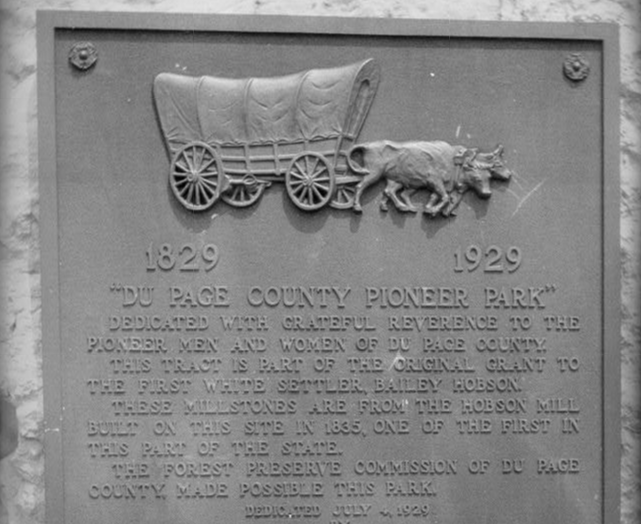
They settled on the DuPage River in March of 1831, eventually building a saw mill and then a grist mill. They also opened their home as a tavern for the farmers waiting for their grain to be ground. You can still see their mill stones at Pioneer Park on south Washington Street.

Clarissa went on to birth seven more children and continued to run the mill after Bailey died in 1850. Despite her early hardships, Clarissa herself lived to be 84.


Wednesday, October 18, 2017

Notable Naperville Women -- Peg Price

Her place in history books and trivia quizzes is forever ensured:  Margaret “Peg” Price was Naperville’s first female mayor. So far, she is also Naperville’s only female mayor, but she probably counts on that record being broken.

Peg Price served two terms as mayor, from 1983 until 1991, which represents only a portion of her time in public office. Over a thirty year career, Price was also a City Council member for two terms, served as city plan commissioner and held positions on boards such as the DuPage Mayors and Managers Conference and the Northeastern Illinois Planning Commission. 

Rather than a born-and-bred Napervillian, Price arrived in 1967 with husband Charles and two sons as part of the great mid-sixties influx when subdivisions were popping up all around town. 

By 1969 Price was deep into local politics and part of the referendum campaign that brought about our current Council-Manager form of government. Originally with four councilors, in 1984 then-Mayor Price oversaw the number of councilors grow from four to six. 

Other changes during Price’s watch included the planning and building of today’s Municipal Center. City Hall used to be in the stone building on Jefferson Street that now houses La Sorella di Francesca. Although she was instrumental in keeping the Municipal Center downtown, by the time it opened in 1992, Price's term as mayor had ended. 

Another innovation under her leadership is the annual State of the City address. Price gave the first “state” speech in 1991 in partnership with the Chamber of Commerce to associate the objectives of government with those of the business community. Price continues to attend the annual address and you may have seen her with Mayor Chirico and Mayor Emeritus Pradel last spring. 

Another place to see her is on the Community Concert Center door in Central Park. The First National Bank purchased space to depict four mayors in the art on the door:  Chester Rybicki, Price, Sam Macrane and George Pradel. The painting is called The Great Concerto and features a number of  notable Napervillians. You can see it just before the door raises and the Naperville Municipal Band begins a summer concert.

Wednesday, August 16, 2017

Notable Naperville Women -- Jane Sindt

Newer and younger residents of Naperville may not be familiar with Jane Sindt as a person, but if you’ve ever strolled the Riverwalk, attended an event at the Grand Pavilion or gone swimming at the beach, you are probably familiar with her name. The drive there was designated “Honorary Sindt Memorial Court” in 2002.

Older residents with a longer history in Naperville knew Jane as a person, or more precisely, knew her as a tornado of convictions and activity. 

Caroline Martin Mitchell left her family home to the city in 1936 to become Naperville’s historical museum. But it was Jane who first moved buildings onto the property and started the Heritage Society in 1969 to do so. Century Memorial Chapel was the first building to be carefully secured, raised and rolled through the streets to what we now call Naper Settlement.

The venture was not completely popular at the time, but when Jane took on a project, she completed it well and with flair. 


Jane’s interest was not because she was a fourth generation Napervillian. In fact, she attended 23 elementary schools and five high schools while growing up as her father worked in locations across the country, taking the family along. 

Jane arrived in Naperville as an adult in 1957 with her husband Gus and two children, Susan and Tobey. 

During that time, she was a stage actress at local theaters as well as appearing in TV commercials and Chicago-filmed movies, but she also developed a fierce love for her adopted community. She is quoted as saying: “When I first moved to Naperville, so many important historic places were being torn down. People in the midwest seemed to think they didn't have anything worth saving.” Jane thought differently.

In addition to serving as the first leader of the Heritage Society from 1969-1976, Jane also started the Farmers Market at Fifth Avenue Station and worked closely with May Watts to create the Prairie Path. 

The Sindt family home was nestled among the trees at the very end of Honorary Sindt Memorial Court and she lived there until she died on Christmas Eve in 1995. By agreement, the land became a Naperville Parks property. Part of it is a maintenance facility, but some of land is a public trail. When you’re strolling that section, take a moment to remember Jane and her dedication to her adopted community.


Wednesday, July 19, 2017

Notable Naperville Women - Peg Yonker

Margaret Barnes Yonker, otherwise known as “Peg,” passed away in fall of 2016 at the age of 93. While not a Naperville native with family stretching back to the 1800s, Peg devoted more than half of her life to preserving this city’s history. 

Like many mid-century women, Peg went where her husband’s career took him and they wound up in Naperville in 1959, just as the town started booming.

Smart and energetic, Peg put her efforts toward local philanthropic enterprises both big and small. She was among those who established Summer Place Theatre in 1967 and was a co-founder of TAG, Naperville’s first foster home for teenage girls in 1970. 

Those were busy years for the city and foundations were laid for many of the programs and amenities we enjoy today. The Naperville Heritage Society was formed in 1969 by volunteers like Peg, among others, who wanted to save St. John's Episcopal Church from being leveled by development. They raised money and interest enough to move the church onto the Martin Mitchell property which launched the Naper Settlement we enjoy today.

Peg spent more than 30 years with the Heritage Society in many and various roles including volunteer, fund-raising chairperson, president and director. Probably her favorite way to serve however was as a costumed interpreter. 

Peg was frequently invited to schools, churches and other community groups to give her presentations on early Naperville history. She made her own costumes and wrote her own scripts for the three personalities she spoke as: Hannah Ditzler, Almeda Naper and Lone Feather, a composite character representing the original inhabitants of the area. 

In celebration of the city's sesquicentennial, a group of folks recreated the settlers’ journey from Naper’s ship in Lake Michigan to the arrival at the DuPage River. Peg was among those who took part in the the three-day event that started with horse-drawn wagons through Chicago’s downtown and ended with a parade through Naperville’s. 

No longer performing her character sketches, Peg committed her presentations to paper for the 175th anniversary celebration in 2006. Her book “Lone Feather and the Settlers” preserves Peg’s enthusiasm for her adopted town for future generations. 

Wednesday, June 21, 2017

Notable Naperville Women - Genevieve Towsley

If you’ve ever walked or driven by the Barnes & Noble Bookstore on the corner of Washington Street and Chicago Avenue, no doubt you’ve seen the bronze statue of Genevieve Towsley sitting near the door. 

Part of the Century Walk public art initiative, the statue shows Genevieve much as she was when she passed away in 1996 at the age of 88. Commemorating her nearly 50 years of writing for Naperville newspapers, she’s holding the familiar notepad and pencil.

Naperville became Genevieve’s “home town” in a round-about way. She was born in Oak Park, but spent many years on an Idaho farm when her family moved there when she was eight.  They returned to Illinois in 1924 so she could attend her chosen college, North Central, at that time still known as Northwestern. 

Genevieve stayed on at North Central College as a teacher until 1932 when she left to raise her family. By 1948 she was writing for The Clarion, a local newspaper. 

One of her former NCC students, Harold White, Jr., bought the Naperville Sun and convinced Genevieve to write for him starting in 1954. She wrote two columns for the Sun over the years:  The Grapevine and Sky-Lines. The Grapevine dealt with local news and issues in the Naperville community. Her column was influential in the desegregation of Centennial Beach and when the Naperville Heritage Society was formed in 1969, she was a charter member. Her writing helped generate interest moving Century Memorial Chapel to the grounds of the Martin Mitchell Mansion, becoming the first addition to Naper Settlement.

Sky-Lines had more of a historical tone. Genevieve re-told local legends, interviewed long-time residents and waded through old books as research. Because of her work, the Sky-Lines articles are a major resource of local history. A selection of columns was gathered up in 1975 under the title A View of Historic Naperville and has been through several printings.

Daughter Dr. Caryl Towsley Moy, a professor, a clinical therapist and many other distinguished things, wrote a book of her own to honor her mother, Genevieve.

When the statue was first installed, Genevieve was wearing her customary glasses, but unfortunately those have disappeared. Still, it’s a pretty faithful depiction of a lovely and smart writer who probably loves sitting outside a bookstore and is happy to share her bench with you.

Wednesday, May 17, 2017

Notable Naperville Women -- Named "Naper"

Gravestone of Almeda Naper, wife of Joseph
Traditionally May is Heritage Month in Naperville, including Civil War Days which is May 20 and 21. So let’s take a look at the women who were here at the beginning. 

It’s Joseph Naper’s bigger-than-life statue in the park on Mill Street and Jefferson Avenue, but he certainly didn’t found this town without some help.The first settlers included his brother John Naper, his brother-in-law John Murray and their pretty remarkable wives.

When these three families arrived 1831, this land was the western frontier with a just a couple of families, such as the Hobsons, in the area.


Joseph and John Naper were in their early 30s, experienced and in the prime of their lives. Joseph’s wife Almeda was a thirty-one-year-old mother with three young children. John’s wife Betsy was even younger, just twenty-three, with a couple of preschoolers in tow. Both women would more than double the size of their families in Naperville. 

Gravestone of Amy Naper Murray,
wife of John Murray
and sister of Joseph and John Naper
The Murray family was of a slightly older generation. Amy Naper was probably a half sister of Joseph and John from a previous marriage of their father. She was keeping house for another brother, Benjamin, in the earliest days of Ashtabula, Ohio when Joey and Johnny were just tykes. That’s where she met John Murray who was a school teacher in the newly-settled town. Naperville wasn’t the Murray’s first pioneering gig.

The Murrays already had a married daughter whose husband, child and in-laws were also among the earliest Naperville inhabitants.

Robert Naper, the father of Joseph, John and Amy died in Ohio before the family relocated to Illinois, but his wife Sarah is buried in the Naperville Cemetery. She would have been in her mid-sixties when she helped hack a settlement out of the prairie. 

With only each other to rely on, it’s remarkable that these women fed and clothed their families, gave birth and tended illnesses and injuries in this isolated wilderness. 

1874 map of Naperville showing
Betsy Naper's land
Almeda and Betsy both outlived their spouses by decades, although Amy predeceased her husband. The Naper bloodline apparently burned bright rather than long.

Wednesday, April 19, 2017

Notable Naperville Women -- The Librarians


Naperville boasts three state-of-the-art libraries today. The very first one opened in 1898 thanks to a bequest from James Lawrence Nichols, fundraising by the Women’s Club and donations from other community members.

The first — and many, many subsequent — librarians were local women with a passion for sharing knowledge.

Edna Goss got the library started, cataloguing the books according to the still-newish Dewey Decimal System. But Edna was a only temporary librarian, assisted by Hannah Ditzler who soon took over.

Hannah left the post when she married John Alspaugh in 1905 and Jennie Niederhauser assumed the duties. Jennie’s husband, who had been teaching at North Central College, took a position at Penn State in 1907 so she also resigned to follow him to Pennsylvania.

Jennie was succeeded by Rose Barnard who enjoyed the job as well as the salary of $35 a month. Unfortunately, Rose’s sister got married and she was needed to manage the household of her aging parents. Her father offered to match the library salary, so Rose left the job in 1909.

During her tenure, however, she had been ably assisted by Mary Barbara Egermann who was trained to take over.

Mary, known as Matie, was the daughter of two local brewing families: Her mother was Barbara Stenger of Stenger Brewery and her father Joseph kept a saloon on Jefferson Avenue where Naper Nuts and Sweets currently operates.

Being Naperville’s librarian was Matie’s life’s work and she served the community until 1950. In addition to managing the books, Matie started a little museum in the building that included local history and dolls from around the world. Many of the dolls were brought back by young military friends returning from overseas. You can see a depiction of a uniformed man offering a doll to Matie on the Chicago Street mural near Sullivan’s.

After Matie’s 41 years of service, Miriam Fry and Katherine Finkbeiner took the helm. They also logged an impressive number of years at Nichols, serving until the 1980s.

Today, we are lucky to have teams of dedicated librarians that serve in all three locations. If you haven’t checked into the business resources at the library, give them a call and learn about the cool stuff they offer to help run your business.

Wednesday, March 15, 2017

Notable Naperville Women - The Martins

Naperville will forever be grateful to Caroline Martin Mitchell. When she died in 1936, she gave 212 acres of downtown property to the city, including her family home, Pine Craig.


Now referred to as the Martin Mitchell Mansion in her honor, the house is the centerpiece of the Naper Settlement. In addition, Central High School, Sportsman’s Park, and Edward Hospital are also all situated on Martin family property.

Caroline’s father, George Martin, came to Naperville as a child in 1833, just a couple years after the Napers arrived. Their original property was basically Rotary Hill. When you’re walking around there this summer, look for the sign that marks the house where George and his wife Sibelia raised their family of one son and three daughters.

George’s business enterprises were a brick and tile manufacturing company which really took off during the rebuilding of Chicago following the Great Fire. He built Pine Craig across the street and moved his now-grown family into it.

Unfortunately, George died just a few years later. But his business enterprises did not. Son George was practicing law in Maywood and Miami and fighting ill health, so the bulk of the work was carried on by his widow Sibelia and his daughters Lizzie, Kittie and Carrie.

In 1908, Kittie's obituary in The Naperville Clarion read:

Miss Martin was a woman of unusual business ability. She kept the books of the firm of Martin & von Oven for thirty-six years, sixteen years of which she was one of the firm's managing partners. She was highly respected by her business associates, and to her tact in dealing with employees, and general business integrity and enterprise, the success of the firm is, in a measure, due.

Contrary to norms of time, Lizzie, who was born a dwarf, worked and socialized alongside her sisters. Her obituary reads:

The deceased was well known and highly respected among her associates and  friends.

Caroline was the only child to marry, but she moved her husband into Pine Craig rather than move away from the family and the family business.

She never had children of her own and was the last of her family to pass. Caroline’s pride in her family and in her city prompted her generous legacy, making a huge and lasting impact on the vibrancy of Naperville’s downtown.

Wednesday, February 15, 2017

Notable Naperville Women - The Fredenhagens

Fredenhagen and her daughters Rita and Jeanne shared a deep love for Naperville. So with a nod to both Valentines’ Day and the recent movie “The Founder,” here’s a bit of their story:

Grace’s husband, Walter, owned an ice cream plant in Rushville, Illinois called Frozen Gold. School friend Earl Prince served Frozen Gold at his Downers Grove parlor, Prince Castle.

At the onset of the Depression, Walter sold the Frozen Gold plant and with Earl, opened more Prince Castle shops. The Naperville one opened in 1931 with a dairy behind it to make fresh ice cream.

Prince’s signature offering was the One-in-a-Million malt. For only ten cents, you could get a shake with four scoops of ice cream. It was so thick, that that the motors of the Hamilton-Beach blenders kept burning out.

So Hal and Walter developed the multi-mixer with a three-horsepower motor to mix four malts at one time. In addition to using multi-mixers in Prince Castle stores, they also sold them to other restaurants.

One of their salesmen was a guy from Oak Park named Ray Kroc who traveled the country. He sold a couple of mixers to brothers Dick and Mac McDonald, owners of a burger place in San Bernardino, California. Hamilton-Beach came out with their own multi-mixer which decimated Prince’s sales, so Kroc started another business. For more on that story, watch the new Michael Keaton movie!

Prince Castle continued to thrive throughout the 1940’s, but by 1955, Hal and Walter parted ways. The Fredenhagens continued in the ice cream business joined by family members like son Ted and daughter Rita here in Naperville and daughter Jeanne who shipped strawberries for shakes from her farm in Seattle. The shop’s new name became Cock Robin.

Cock Robin is a huge part of Naperville’s collective memory, from the square scoops to the One-in-a-Million Malts to the English toffee during holidays.

Both Grace a Rita have passed on now. In addition to supporting Cock Robin, Grace Fredenhagen served as president of the Naperville Woman’s Club and director of the Chorus.

Rita was also active, serving with the Rotary, on the Fire and Police Board of Commissioners and on the Edward Hospital Institutional Review Board.

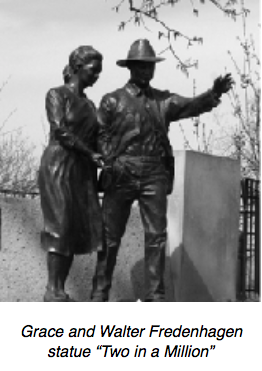
The Cock Robin on Washington Street closed in 2000. Today, it is Fredenhagen Park. The park was dedicated in 2004 by Rita and Ted in honor of their parents Grace and Walter.

Wednesday, January 18, 2017

Notable Naperville Women - Hannah Ditzler


History books record plenty of men’s names because of the traditions of our society, but of course there have been many women who made distinctive contributions to our city. This year we’ll take a look at a few of Naperville’s notable women.

Hannah Ditzler lived from 1848-1938, spending most of that time in Naperville. She was born in town, but her parents arrived here in 1844 from family homes in Pennsylvania. (“Pennsylvania Dutch” is really “Pennsylvania Deutsch,” which is German for “German.”)

In addition to being a typical daughter and housewife of the time, Hannah also served as a teacher at the Naper Academy and as a librarian at Nichols Library, but her main contribution to Naperville is her extensive diary.

Throughout the years, Hannah took notes on the goings-on in her community. She talked about the weddings and the funerals she attended. She wrote down juicy little gossip tidbits and personal family stories. She also included newspaper clippings, sketches, and fabric swatches from clothes she made.


It was Hannah who encouraged her sister Libbie to record her arduous wagon train journey to California as a new bride in 1854.

During the Civil War, Hannah kept track of the sons of local families who were serving. She copied into her diary letters sent home by her own “soldier boy.” As it turned out, Hannah was unlucky in love. The “soldier boy” married another and Hannah herself didn’t marry until 1903 when she was 55 years old. The man she married, John Alspaugh, was a widower with children and also her first cousin, which wasn’t legal in Illinois, so they married out of state.

Hannah’s scrapbooks and diaries are part of the Naper Settlement collection and serve as an indispensable touchpoint for our history during the nineteenth century.

Wednesday, December 21, 2016

Random Last Round-Up of 1966

Before we bid farewell to our look at 1966, here are a few random things that happened that year. It was a weird and wonderful time!

The National Historic Preservation Act became law when President Lyndon B. Johnson signed off on it in October of 1966. While there were some similar actions taken before this — for instance, Teddy Roosevelt’s commitment to preserving our nation’s natural resources and archeological sites — this law encompassed a wide-range of things to be preserved. It established institutions like the National Register of Historic Places, the Advisory Council on Historic Preservation and the State Historic Preservation Office.


Earlier in the year, Jacqueline Susann released her blockbuster book “Valley of the Dolls.” The movie appeared already by the following year because “Dolls” was such a huge hit. While not very PC by today’s standards, it dished on sensational subjects like fame, drugs and sex that were a revelation to mid-sixties America and still relevant today.

This year Brookfield Zoo celebrated their 50th year of offering Mold-A-Rama figures. If you’re from Chicago, you probably made one in your youth and know that hot, waxy smell. “Miniature plastic factories” really took off at the New York City World’s Fair a few years before, but Chicago has the closest relationship. There are only a few places left that feature these antique machines. Brookfield offered special edition figures throughout the anniversary year, including the 1966 Walrus.

Peppermint Patty also made her debut during the summer of 1966. She was the first female Peanuts character to not wear a dress — a nod to the growing women’s movement. Patty was unconventional in many ways, including having a particular close relationship with her single-parent dad.

2016 comes to a close soon and no one knows what 2017 has in store, let alone what 2066 will be like. It’s amazing the things that seem odd and the things that remain familiar over a fifty year period. Can’t wait to see what unfolds!


Wednesday, November 16, 2016

Another Look at Naperville in 1966

We’ve been talking about how Naperville looked fifty years ago. Here are a few more notes about 1966:


  • Bev Patterson Frier received the Naperville Chamber of Commerce’s Lifetime Achievement recognition at the Small Business of the Year Awards in 2011. Bev has run several businesses, but her first was the Fabric Inn which opened in 1966 in the space on Washington Street where Room 363 currently operates.

  • While they trace their history back to 1890, it was in 1966 that the Phoenix Metal Cap Company changed their name to Phoenix Closures. Phoenix Closures is a current NACC member.Edward Hospital completed a new addition in 1966 — and have been adding ever since. During that summer, the hospital treated Lillian Grace Avery, the country’s first Medicare recipient.
  • A Bavarian family named Keller started farming here in 1852 and had a farm on Ogden Avenue where they sold produce from a roadside table. They sold that land in 1966, but continue to farm in the area and now sell their produce at several Keller Farmstands.


While there were certainly growing pains fifty years ago — it was the ‘60s, after all — Naperville worked through the issues to move ahead. 1966 was an especially exciting year in the city’s history and a launchpad for much of the growth we continue to enjoy today. 

Wednesday, October 19, 2016

Naperville’s 1966 Population Boom


Naperville had already started its growth spurt, but 1966 certainly accelerated the boom. 

In August, 700 employees started work at Indian Hill Bell Labs, known more recently as Lucent. Later in the year, Amoco Chemicals asked the city to annex160 acres for them to build a research facility. 

The city also annexed 210 acres that were owned by the Chicago Burlington and Quincy Railroad. Immediately, Nabisco purchased some of that land although the plant wouldn’t be completed until 1968. There are car dealerships and light industry in that section as well as the new Fort Hill Activity Center. 

Naperville certainly didn’t have enough housing for the employees who were working all these new jobs. Harold Moser had already been developing subdivisions like Aero Estates, Maplebrook and Cress Creek since the mid-1950s, but 1966 was better than ever for Moser and his competitors. 

Naperville beat neighboring suburbs in the number of  building permits issued for several months in a row that year. New homes were built in Saybrook, Maplebrook, Longwood and Century Hill. 

“New England” styles were popular — and for a good reason. Many of Bell Lab’s transferees were from the east coast.

Ken Small was Bell’s public relations supervisor at the time. He took city and school officials out to New Jersey to help families get comfortable with the move. Small himself fell in love with Naperville and served as mayor from 1971 until 1975.


In one article about new homes in Century Hill, the reporter wrote that “Naperville retains many small town customs, such as summer band concerts in the park and ice cream socials.” 

While the price of homes here have certainly changed, it’s nice to know some things stayed the same.

Wednesday, September 21, 2016

What Naperville Folks Watched on TV 50 Years Ago

I've been writing about the remarkable number of events that happened in the Naperville area in 1966, including the inception of the Park District, Summer Place Theatre and the new municipal band shell. With the start of the fall television season, I got to wondering what shows folks watched on their console television sets 50 years ago. 

The 50th anniversary of the original “Star Trek” series, which first aired on September 8, 1966, has been getting a lot of media attention, but there were plenty of other shows that debuted during that same season. Many of them you may remember watching, but there are a few that have completely fallen out our collective memory.

“The Monkees” and “The Girl from U.N.C.L.E.” were both new that year. The spin-off “Girl” only lasted one season. While they certainly stayed popular, “The Monkees” TV show was only on the air until 1968. Two other shows that debuted in 1966 were “That Girl” and “Family Affair,” both of which stayed on the schedule until 1971. 

This was the era of goofy comedies. The creators of “Gilligan’s Island” reused props, sets and music for a new show in 1966 that was called “It’s About Time.” It starred Imogene Coca as a cavewoman named Shag who welcomed a couple of astronauts who accidentally went back in time. A second time-travel show, “The Time Tunnel,” also started that fall, although it wasn't a comedy. Neither one made it past the first season. 

“Mission: Impossible” was also a new 1966 show, long before it was rebooted as a movie. It wound up self-destructing messages until 1973.

Other TV shows you may remember from that season were:


  • The Smothers Brothers Comedy Hour
  • The Rat Patrol
  • The Green Hornet
  • The Phyllis Diller Show


In addition to goofy comedies, time travel and space fantasy, westerns were still popular. “Pistols ’n’ Petticoats” is a show most people won’t remember. “Rango,” about an inept sheriff, starred Tim Conway. It sounds like it should have been fun, but it was once ranked among the 50 Worst Shows of All Time by TV Guide

1966 was the first season to show nearly all the prime time programs in "living" color. Earlier in the year, “Dark Shadows” began, but since “Shadows” was a daytime soap opera, it was filmed in black and white for another year. 

Since there was no way to record TV shows, folks would have to miss their favorite to go out at night and many of us never saw these shows the first time around. Instead, we became familiar with them through endless reruns. It's kind of fun to think of what Naperville folks were watching during this extraordinary time in our history.