Wednesday, February 27, 2013

Calling Naperville-1913


In celebration of the Chamber’s 100th anniversary, let’s take another look at Naperville in 1913. Or rather, let’s listen!

Chicago’s first telephone company was founded in 1878 and the use of the telephone grew tremendously during the last decades of the 19th century.

Originally telephones connected one-to-one. For instance, Naperville’s first private telephone connected Philip Beckman’s home to his harness shop at Chicago and Washington. Eventually switchboards made it practical to connect with anyone.

Early in 1913, the City of Naperville Council resolved that the Inter-State Telephone and Telegraph company be required to furnish seven free telephones per their franchise agreement for the residences of council members Givler, Hiltenbrand, Bowman, Schwartz, Luebcke and Palm.

The meeting minutes don’t say what kind of phone, but both wall units and candlestick units were in vogue then.

The telephone directory gave instructions for use in the front of the book:

“To call the Exchange Office, take the hand telephone from the hook and place at the ear. (If the telephone has a crank attachment for signaling Central, give two quick turns of the crank before removing the hand telephone from the hook.)

The Operator will say ‘Number please?’ Give the exchange name and number of the subscriber wanted...Remain with the telephone at the ear until an answer is received.”

The directory also begs to “call attention to the fact that we maintain a messenger service at each exchange and will call any party with who you wish to talk, even though he has no telephone.”

A little over 350 telephone numbers were listed in the directory from that era, including North-Western College (now North Central), the Naperville Lounge Company (later Kroehler) and W.W. Wickel Drugs (now Oswald’s Pharmacy.)

In February of 1913 the council granted the Chicago Telephone company permission to trim five elm trees on High Street west of Main Street and moved to pay the city’s telephone bill of $13.36.

How the times have changed!

Wednesday, January 16, 2013

Naperville100 years ago When the Chamber of Commerce was Founded


The Naperville Association of Commerce was founded in 1913. That means our Naperville Area Chamber of Commerce is celebrating 100 years of business promotion and fellowship! So in the coming months let’s climb into the “way back” machine and take a look at Naperville one hundred years ago.

1913 was a pivotal year for our city’s government. The year started with Mayor Francis Granger overseeing eight alderman who represented four wards. In April, however, newly-elected Mayor Francis Kendall became the leader of the newly-formed commission form of government.

Now 100 years later, Naperville is planning to vote in April 2013 on whether to reconsider the ward system we are currently planning. As they say, “everything old is new again.”

Mayor Granger moved with his family from New York City to DuPage County when he was an infant. He was a successful farmer and later president of the First National Bank of Naperville.

Throughout his life he was very involved in the community, including stints as County Supervisor, Highway Commissioner, and Alderman. Granger also served seven years as President of the West Side School Board and spent 30 years as a School Trustee, so it was a natural choice when Indian Prairie School District 204 named a middle school after him.

Mayor Kendall was also involved in our schools. He attended North Central College when it was still North Western and later served both as Superintendent of Naper Academy and principal of Ellsworth School.

Indian Prairie’s Kendall Elementary School, however, is not named for Francis but for his son Oliver “Judd” Kendall, the World War I hero who in 1918 was captured and killed near Cantigny, France.

The Kendalls built onto an older cottage in Naperville to create a gracious family home that now houses Quigley’s Pub and the Jefferson Hill shops.

Wednesday, September 26, 2012

A Rich and Beautiful Corner


Across the street from Noodles, once the Ditzler and Hosler Dry Goods store, stands Zazú Salon and Day Spa which also once housed a far different business in the nineteenth century.

The sturdy Italianate building with its unique granite corner was built by George Reuss in the 1860’s. Originally a tailor from Bavaria, young George sailed to America to fulfill his ambitions — which he did admirably.

After a couple of years in St. Charles, he married his sweetheart from back home and they moved to Naperville. George prospered as a merchant tailor. He employed other tailors and built both the corner establishment and the attached addition.

Successful and well-respected Reuss opened the Bank of Naperville in 1886. The massive stone entrance was added at that time to make the new bank look appropriately impressive.

Eventually George’s private bank grew to become a corporation. Both his son Joseph Reuss and his son-in-law Valentine Dieter were employed by the bank and served on the Board of Directors.

1917’s “Souvenir of the Naperville Homecoming” boasts that “the bank now has a capital of $100,000 and a surplus of $25,000 with deposits of about $400,000. A modern steel lined burglar proof vault has recently been completed and safetly [sic] deposit boxes installed for the security of the bank’s patron.”

Son Joseph Reuss was called to the bar in 1896 and was the attorney for both his father’s bank and the city of Naperville.

George suffered a stroke in his later years and was forced to retire from active participation in his businesses, his church and his city. He died in 1901.

Among his activities, George served in 1880as the president of Naperville, the term used before the city was incorporated.

Son-on-law Valentine Dieter was the last president before Naperville started electing mayors in 1890.

Wednesday, August 22, 2012

Changes Around the Corner


Talk is swirling about how the proposed Water Street project will change the look of downtown Naperville. But not all downtown changes have been so dramatic.

When you pop into Noodles and Company for lunch the building fits right in with its neighbors even though it was radically updated thirteen years ago.


Just weeks before the new millennium dawned, a fire broke out in the upper floor of the building following some roofing work done earlier in the day. No one was injured in the fire that destroyed the upstairs apartments, but the lower level restaurant suffered severe smoke and water damage.

Coupled with the need to bring the old building up to code, repairs proved too costly so Wilma’s Café moved into a plaza on Ogden Avenue. But the space was rebuilt and it still strongly resembles its earliest incarnations.

Before the popular Café, the building held many other businesses, including a series of drug stores and dry goods stores.

Moses Hosler, General Merchant, advertised in the town’s first Holland’s Business Directory in 1886 with his then-partner Eli Ditzler. Moses’ daughter Malinda married John Rickert, a familiar Naperville name.

Later Herb Matter and Eli Stark ran a dry goods store in the same space. Eli Stark was also an enthusiastic amateur photographer whose legacy is a number of early Naperville photos. He is immortalized with his camera on the first panel of the “Pillars of the Community” mural on Chicago Avenue. 

Monday, July 16, 2012

Happy Birthday to Joe Naper's Settlement!


This week marks the anniversary of the date that Joseph Naper along with his family and friends arrived at the banks of DuPage River to start their new settlement. The exact date remains elusive, but it was around the fifteenth of July.

Normally, I would suggest stepping out onto the prairie at our local forest preserves like Churchill Woods or West Chicago Prairie to see and feel what it would have been like when the settlers finished their journey. But this year there is probably no similarity!

In 1831 winter reluctantly gave way to spring. Ice on the Great Lakes broke up quite late and ships, such as Naper's Telegraph, had to wait longer than usual before it was safe to start sailing. Cool and wet weather continued for much of the season and into summer. While it was July before the families arrived at Fort Dearborn, the landscape must have looked as green and fresh as if it were early June.

Contrast that with this year! Our mild winter, early spring and super hot and dry summer has fried the prairies to a crisp. Can you imagine if the Napers, the Murrays, the Boardmans, the Sissons and the other families were pulling up their ox wagons today? There isn't much time left to grow any sort of crops under the best conditions. Trying to start seeds in this kind of weather would be very disheartening!

Fortunately for Naperville's settlers, they were able to sow rutabagas and buckwheat and grow enough food to survive their first winter. As we shop for groceries in our air conditioned stores, we should spare a thought for those hearty pioneers who left civilization and comfort behind them to start new lives in their new home here in DuPage County 181 years ago this week. 

Read all about the journey in "Ruth by Lake and Prairie," a "Little House" version of our very own history written for children ages eight through twelve -- and their parents!


Tuesday, May 15, 2012

Before Naperville Had McMansions, We Had Real Mansions

 Sketch from menu of Willoway Manor when it was a restaurant.

 Heatherton during its gracious days.

Dining outside on a warm summer’s evening is a fleeting pleasure for Chicago-area folk. One favorite spot is the patio at Meson Sabika on Aurora Road.

Originally, the restaurant was a private home. At one time it was known as Willoway Manor, lending its name to the adjoining Wil-O-Way subdivision. The illustration above is a menu from when the manor first operated as a restaurant. But when William Ransdell Goodwin lived there, it was called Oakhurst Farm. Apparently people liked to eat out-of-doors even during the Goodwins’ time. A Chicago Tribune article from June 2, 1909 tells of Mrs. Goodwin’s garden party for 400 women who sipped pink lemonade while seated on camp chairs under the trees.

William raised Berkshire swine, Buff Leghorn fowls and Indian Runner ducks at Oakhurst, as well as Angora cats, but he was also an “ardent automobile enthusiast” and a well-respected writer for the Breeders’ Gazette, according to his obituary: “He was buried Tuesday afternoon, April 8, 1919, in the village cemetery at Naperville, his shaft within sight of Oakhurst's pillars. No stone can ever symbolize the imperishable monument he holds in the hearts and minds of American breeders.”

Oakhurst Farm was considered to lie outside of Naperville, but William’s brother had an estate within the city limits. John Samuel Goodwin partnered with William to breed Aberdeen-Angus cattle and they were both members of the Saddle and Sirloin Club. John also served as a judge in Chicago, although he lived at Heatherton, his gracious manor here in town.

John built Heatherton on the site of Lewis Ellsworth’s house who in turn built on the site of Fort Payne. Joe Naper and the other settlers erected the fort in 1832 for protection during the Black Hawk War, but it was never actually used and was eventually dismantled. North Central College’s athletic fields fill much of the estate today.

Heatherton went up in flames on March 14, 1920, and in an eerie coincidence, Goodwin, who was staying at the Palmer House in Chicago, died of a heart attack just two hours before the fire that destroyed his home .

Monday, April 2, 2012

Living with History


We had the opportunity to visit with John White in Elburn last week. Mr. White kindly took us on a tour of his 1840's log house, filled with antique furniture, pottery and other bits of everyday life.

The log house is not original to the property -- he moved it like a huge stack of Lincoln Logs from Wisconsin -- but it was originally built more than 150 years ago.

Not all of it could be salvaged.Parts tha were too rotted were rebuilt or worked around. For instance, the two-story walls are now more like one and a half stories and the flooring had to be laid completely new.

But what a floor! The planks are random widths, from narrow to almost two feet wide. White ripped the boards himself from a White Pine that grew near his farm and was toppled during the Plainfield tornado in 1990. He figures the tree was a seedling about the same time that the log house was being built originally.

Some people like to read history and others like to visit historical sites, but John White went out to rescue history, dragged it home and spent years rebuilding it. Many thanks to Mr. White for a truly special Saturday morning!

For more details of Mr. White's log house, see The Daily Herald article.

Wednesday, March 7, 2012

Six Degrees of Girl Scouting


March 12, 2012 was the 100th birthday of the Girl Scouts. In Naperville, girls were part of the DuPage County Council until 2006 when it merged with adjoining councils to become Prairie Winds. In 2008 a major reorganization created Girl Scouts of Greater Chicago and Northwest Indiana, the largest council in the United States, serving 94,000 girls.

But here’s another local connection: The Daisy Girl Scout is named after Juliette Gordon Low, nicknamed “Daisy.” While living in England, Daisy became interested in the Boy Scout and Girl Guide movement there and brought the concept back to the States.

Daisy’s mother Nelly raised her family in Savannah, Georgia but she was born in Chicago. In 1912 Nelly wrote a book called “John Kinzie, The ‘Father of Chicago,’ a Sketch,” which was about her grandfather. In fact, Nelly felt so connected to Chicago that after seeing a 1916 Chicago Daily News article about early settlers, she wrote them to point out:  “I notice that my name is conspicuously absent. This is more surprising, as I am the oldest person now living who was born in Chicago...therefore, older than Chicago itself.”

Nelly’s father, John Harris Kinzie, arrived in Chicago as a six-month-old baby in 1804. His younger sister, Ellen, has been called the first child of European descent to be born in the yet-to-be incorporated Chicago.

Daisy’s grandmother and namesake was Juliette Augusta Magill. She married John Harris Kinzie and moved with him to Chicago in 1834. Juliette Kinzie wrote a book called “Wau-Bun, the Early Days in the Northwest” about her own experiences in early Chicago as well as those of her mother– and father-in-law.

Her mother-in-law was kidnapped as a child and raised by Native Americans. As an adult she married John Kinzie (John Harris Kinzie's father) who was a British sympathizer, an Indian agent and a spy, which is most likely how he and his family avoided being killed during the Fort Dearborn Massacre. It may also explain why he murdered one of his Chicago neighbors. Kinzie owned a lot of property in the fledgling settlement, including an inn during the time Joseph Naper and his group arrived on the schooner Telegraph in 1831.

John Kinzie’s step-daughter, Elizabeth, was among the many who took refuge in Fort Dearborn during the Black Hawk War in 1832, the summer after the Telegraph arrived. Naper Settlement families also fled to the fort. Unfortunately, over-crowding and illness made the fort almost as dangerous. Elizabeth died there and the Naper families built their own fort and moved back to their settlement.

That's a lot of local history to think about the next time you bite into a Thin Mint from your local Girl Scout!

Monday, February 27, 2012

Stretching Our Mind Muscles


"Networking" is huge today in the business world and we're all hustling to keep our families fed.

But "talking shop" gets old quickly and we start to sound one-dimensional.

Knowing a few quirky facts about our state's history makes for a richer conversation. Will knowing history make us better business people? Perhaps not. But it will make us better people in general.

I am now using paper.li to curate and share some of the fascinating articles I've been reading. I hope you will enjoy them as much as I do. You can subscribe to my weekly "newspaper"
Brief History - Illinois at paper.li or check in from here.

This week are some interesting stories about Al Capone, Japanese internment camps, War of 1812 batttles in Illinois, an historic black orphanage in Elgin, and Naperville street names. "Extra! Extra! Read all about it" at Brief History - Illinois!

Thursday, February 16, 2012

Naming Naperville Streets


Recently Roy Brossman, a lifelong resident of Naperville and Wheatland Township farmer, passed away. Knowing someone who lives in the Ashbury subdivision on Brossman Street sparked some speculation into other local street names.

Lyman Butterfield

Lyman Butterfield was one of the settlers who threw in his lot with Joseph Naper and came west on the schooner Telegraph in 1831.

He was known as a “fearless character” who was “brave to foolhardy” and “particularly skillful with a rifle.”

Lyman named one of his sons Andrew Jackson Butterfield after “Old Hickory,” the President very popular with Illinois settlers.

Butterfield didn’t stay in Naperville but moved early on to found Milton Township in the present-day Wheaton/Glen Ellyn area.

Bailey Hobson

Bailey Hobson has lent his name to more than one street. He arrived in the area with his wife and five children in the spring of 1831, a few months before the Naper group arrived.

Hobson settled along the DuPage River, but his homestead has always been just outside of the official city borders. Only recently has that bit of land been included in the town proper, making Hobson the actual “first settler of Naperville.”

Hobson built a grist mill for farmers in the area to use as the next closest mill was in Peoria county.

Mark Beaubien

Mark Beaubien reportedly was a man with a huge personality so it’s no surprise that his legacy is spread over a wide geographical range. Beaubien made his mark in Chicago, Lisle and Naperville, too. The Beaubien family was a big one — Mark himself had sixteen children — and older brother Jean Baptiste helped shape Chicago.

Mark kept an inn called the Eagle (later Sauganash) and may have hosted the Telegraph’s travelers.

A born entertainer, Mark “played the fiddle like ze dibble,” as he says in his own words. He performed a rousing last hornpipe at an Old Chicago Settlers Meeting at the age of eighty. His fiddle is on display at the Chicago History Museum.

Later, he moved out to DuPage County and was one of the investors of the Plank Road. His inn, from which he collected tolls , has been moved out to the Lisle Depot Museum. His family cemetery, can still be seen along Ogden Road near the subdivision that bears his name.

For more tidbits of history, see Kate's new weekly "newspaper" at K8's Brief History.

Tuesday, February 7, 2012

Embracing Today's Technology for Yesterday's Sake


You may have wondered where Brief History went to over the holidays. It certainly wouldn't be the first time an emailed newsletter or blog has suddenly close up shop. But Brief History intends to continue to bring little bits of history to people just as it has since the fall of 2009.

To do that, we're experimenting with some new technology; specifically, paper.li, an online "newspaper" generator. The "newspaper" is currently called Brief History - Illinois with the idea that folks searching for Illinois history will find it easily.

Paper.li advertises that it helps people curate "a personalized newspaper built from articles, blog posts, videos and photos." Most of the content is gathered automatically from Twitter or other online sources that the "publisher" follows. Brief History - Illinois derives it's content from Tweets posted by organizations or individuals that K8sBriefHistory follows. This is not a personal Twitter account, but strictly a way to follow organizations that are dedicated to preserving and sharing history. Paper.li publishers can also manually edit the paper to weed out any unrelated content to keep the information offered to you as useful and interesting as possible.

The next step is to get more local historical societies to post their content online so it can be found and curated! It has been a big stumbling block since Brief History was started that it's so hard to get news about wonderful local events before they happen so we can tell people about them. But we'll continue to do our best to share that information with you.

So take a look at Brief History - Illinois at this link: http://paper.li/K8sBriefHistory/1326909766. Since this is a new format, we'd love to know whether it works for you or not. Please feel free to forward your comments to kate@gnuventures.net. Thanks so much!

Chicago Maritime History

Last year Kate spoke at the Chicago Maritime Festival on how the first homesteaders of Naperville traveled from Ohio through the Great Lakes on the schooner Telegraph. An enthusiastic crowd attended the presentation and was slightly surprised to learn that about the journey. Certainly Chicagoans know that there is some serious maritime history involving Lake Michigan, but we often forget it wasn't all merchant ships and Christmas tree ships.

Many of the state's earliest settlers arrived on ships, particularly those from New England and especially after the Erie Canal was finished. Because of the mountain ranges, easterners migrated around the southern or northern range of the mountains rather than go straight west over the mountains. Illinois was settled then from the top down by New Englanders and from the bottom up by Southerners. Springfield was about the middle -- the farthest north that Southerners wished to go and the farthest south New Englanders were comfortable.

Those two cultures were very different in how they viewed education, industry and a host of other subjects and often did not see eye-to-eye. Looking at politics today, it often seems that not much has changed!

The homesteading part of Illinois' history didn't last long, but although it did correspond with the very beginning of the Golden Age of Great Lakes Maritime History. If you wish to learn more, the Chicago Maritme Festival is a wonderful event full of information, crafts and songs for adults and children alike. It will be held at the Chicago History Museum on Saturday, February 25. For ticket information and a schedule of events, see www.chicagomaritimefestival.org.

Tuesday, November 22, 2011

Prairie Style House Gets Renamed


This past month North Central College alums celebrated their Homecoming in Naperville, held later in the fall than usual in order to coincide with the college’s 150th Anniversary commemoration. Naperville citizens were invited to join in the party by watching the Homecoming parade or attending musical and theater performances.

Also in honor of the anniversary, new signage was erected recently to identify campus buildings. The Office of International Programs and the Leadership, Ethics and Values Program, which is right across the street from Quigley’s on Jefferson Avenue, not only got a new sign, but also a new name. The college decided to rename the building in honor of NCC alumni and long-time Naperville residents William and Mary Abe.

Before North Central purchased the building, it served as the Law Offices of Knuckles & Jagel. Jeffry and Barbara Knuckles purchased the building in 1985 from Audrey Truitt McCabe whose father had the home built in 1916. McCabe’s father, Dr. Ruliff Lawrence Truitt, commissioned architect Harry Robinson to design the home in the Prairie School style which was popular in the early 1900’s.

Dr. Truitt originally moved to Naperville to assist his half-brother William in his medical practice and Robinson designed the home to include two rooms where the doctor would examine and treat his patients. Robinson was called back into service when the Truitt family needed to enlarge the house, but alterations were also made in later years. The house was granted Historic Landmark status in June of 1990.

The Wright Stuff in the Suburbs

Harry Robinson designed several other houses in Naperville in addition to the Truitt House. After a childhood spent in Mattoon, Illinois, Robinson studied at University of Illinois and worked for prairie-style architects Frank Lloyd Wright and Walter Burley Griffin at different times.

Prairie Style was very popular for homes in the early part of the twentieth century and many of our suburbs still boast some of these houses. Wright’s home and studio in Oak Park offers tours and events throughout the year and you can drive by other houses he designed in Oak Park as well.

Taliesin, Wright’s home in Wisconsin, is actually Taliesin III after the first two homes Wright built on the site burned to the ground.

Wright left his Oak Park home, as well as his wife, to build Taliesin with his new love Mamah Borthwick Cheney. Cheney and her husband had been clients. In the summer of 1914, Wright was working on a project in Chicago. A servant back at the Wisconsin home started a fire at Taliesin and then went after everyone in the house with an axe. Seven people were killed including Borthwick and her two children.

Wright rebuilt Taliesin, but in 1925 a second fire started, possibly due to a lightening storm causing a short in a bedroom telephone.

Visiting Taliesin is a popular vacation event and docents there or at the Oak Park home are happy to tell you more about Wright’s tumultuous life.

Where History Is Happening

Norwood Park Holiday House Tour

Saturday, December 3
11:00am to 4:00pm

The Holiday House Tour features five homes that present a cross-section of the different architecture of the Norwood Park neighborhood. Houses range from the late 1800s to the 1900s, and showcase the many ways homeowners have blended the past and present in their homes. Admission to 5 homes is $20 in advance, or $25 the day of the event. The tour begins at the Norwood Park Senior Center, 5801 N. Natoma Ave., Chicago. Tickets may also be purchased online or in person at Victoria’s Craft Boutique on December 1 or 2.

Legend of St. Nicholas and Holiday Mansion Tour

Sunday, December 11
2:30pm to 5:00pm

Dressed as the English interpretation of St. Nicholas (Father Christmas), Terry Lynch will tell the festive tales and explain the influence this 4th century Bishop has had on the many traditions of the holiday season throughout the world, both religious and secular. (No important secrets revealed!) Enjoy a walk-through tour of the Mansion, decorated for the holidays, hot cider and cookies, and a children’s activity table in the Chapel Lower Level prior to the presentation. $10 per adult, $8 per youth, $5 per Naperville Heritage Society sustaining member and Season Pass holder.

Tuesday, October 18, 2011

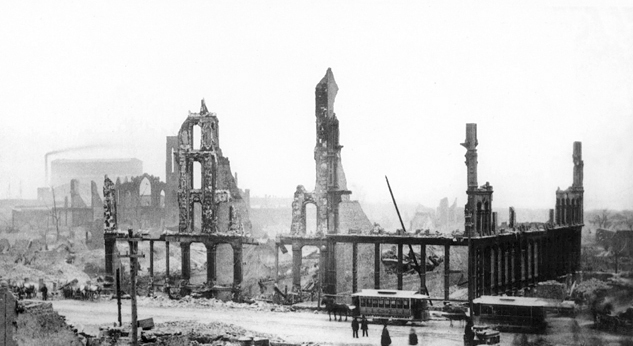
Commemorating the Great Chicago Fire

One hundred and forty years ago this month, Chicago burned. An exceptionally dry autumn and steady, strong winds created a deadly opportunity. The orange glow could be seen from as far away as Naperville, twenty six miles west.

Guy Sabin, a student at Naperville's North Central College wrote about the event in his diary:

Monday, Oct. 9, 1871, 9:00 p.m.
They got a dispatch that a fire had been raging in Chicago since last night, at 9 o’clock. Reports
at dark said it was almost all burnt down, and the fire was still going. The light of the fire can be seen from here.

Tuesday, Oct. 10, 1871
Went in to Chicago at 8:20. Was no school. The Pres. and Professors all went. Most of the city lays in ruins. Amos got a horse and buggy at Salisbury and Mark Castle, Amos and I rode over the ruins. They think it was set afire.

Wednesday, October 11, 1871, 9:45:
Father went in to Chicago at 7. Came home at 6. Mary Rogers came with him. The fire is nearly all put out.

While the Mrs. O'Leary's cow story was later found to be made up by a creative reporter, the fire was determined to have started on DeKoven Street, which was named for John DeKoven. John's wife, Helen Hadduck, was the granddaughter of Dexter Graves who sailed with Joseph Naper from Ohio to start anew in Illinois.

In a largely wooden city, fires were common and both the city and its citizens probably under-reacted to the threat. In fact, the fire department was trying to recover from fighting a fire just the day before. By the time everyone realized how serious the fire was, controlling it was all but impossible.

Reports say more than 100,000 people lost their homes and the death toll was in the hundreds. The fire burned from Sunday until Tuesday, jumping across the river and destroying the water works that supplied water for the fire department. Finally, the winds died down, rain slowed the fire's spread, and the smouldering rubble burned itself out.

Another Great Fire of 1871

The greatest number of fire deaths in United States history occurred on October 8, 1871, but the fire didn't happen in Chicago.

A little to the north in Wisconsin, Peshtigo and surrounding communities also burned that day -- at the same time as the Great Chicago Fire. Estimates of between 1,000 and 2,500 people lost their lives and almost two square miles of homes, farmland and forest. Survivors reported seeing a tornado form from the immense heat and wind generated by the huge fire.

Approximately 300 unidentified victims wound up being buried in a mass grave. You can visit the grave site today, as well as the Peshtigo Fire Museum which is nearby. The museum has a collection of artifacts from the fire, although there wasn't much that remained once the flames finally subsided. Both contemporary accounts and recent publications are also available to learn more about this horrific event that was overshadowed by Chicago's story.

Where History Is Happening

Naper Settlement's All Hallows Eve
Friday and Saturday, October 21 & 22
6:30-10 p.m

Don't miss two of the scariest nights of the year during All Hallows Eve, a unique event based on the darkest literature and events of the 19th century. The usually calm and quaint 12-acre museum village is haunted by a diabolical menagerie of spirits, vampires, werewolves, witches and otherworldly creatures of the night. Joining them are some of the most sinister characters and criminals of the 19th century including Lizzie Borden, Count Dracula, Sweeny Todd and others who roam the grounds or take up residence in the historic houses and businesses.
$15/person. Discounted tickets available online until October 20.

Crime in Chicago Seminar
Wednesday, November 2
7:00 p.m.

Leigh Bienen, Senior Lecturer in the School of Law at Northwestern University is the Director of the Chicago Historical Homicide Project. Working with her research team, Ms. Bienen examined primary source documents and police and court reports to create a compelling database of Chicago murders spanning the Chicago Fire through the first decade of the 20th century. The lecture will focus on the nature of Chicago murder, cases both famous and forgotten, and will juxtapose historic patterns of homicide with the modern day.
Cost: $10, $8 members

Tuesday, September 20, 2011

Early Naperville College Days


North Central College celebrates its 150th Anniversary in November. Originally founded as Plainfield College by the regional Evangelical Association, the school moved to Naperville in 1870, attracted by access to the railroad and some funding deals by the city.

Women as well as men were both students and faculty, but there were limits to the college’s progressiveness.

Local young people in those first Naperville classes included Guy Ellis Sabin and Hattie Peaslee. Hattie’s father served as DuPage County Coroner and operated a store on Chicago Avenue in the building just to the east of the old red Rosebud building.

The following are some excerpts from Guy’s diary while he was attending North Central College:

February 28, 1871: Went up to the depot at 2 o’clock to give a letter to Fred. Pres. Smith was there; can’t tell what he will say, as it was in study hours; expect a lecture.

April 5, 1871: Commenced school today in earnest. Prof. gave us 8 pages in Geometry. Smith gave us a lesson in Virgil. My book cost $1.10. Paid for my scholarships this noon, $6.00. Fred B. gave Hattie a cigar. She said she would smoke it.

January 30, 1873: Mary was called up before the “faculty” today for going to a dance last week. They sent away Hattie Peaslee. Prof. Heidner came up this p.m. to see the folks. The Faculty is thinking of expelling her.

The Mary mentioned above was Guy’s sister and her diary completes his college career with this entry:

Next fall he went back to College and boarded at Ellsworth with Wallace Bush. We drove to Naperville first year after leaving, and attended commencement, and had a picnic at Butterfield Lake.

“Studious” Guy married fellow student, Nannie Sevier, but unfortunately was killed at age 35 while responding as a volunteer fireman. “Wild” Hattie settled down enough to marry W.E. Moore and helped him pursue his Regenerator Furnace patent.

Even Earlier College Days

Just after North Central celebrates their 150th birthday, Knox College in Galesburg, Illinois will be celebrating their 175th starting in January. Like North Central College, Knox was built on a religious foundation, in this case Presbyterians and Congregationalists.

George Washington Gale of New York graduated from Union College and was later ordained in the St. Laurence Presbytery, He started as a preacher, but became increasingly interested in higher education. Gale experimented with manual labor training by offering to educate young men in exchange for their labor. The experiment was such a success that he incorporated the Oneida Institute in 1827.

The manual labor training plan was expanded and by 1836, Gale released his "Circular and Plan" for a "prairie college" in Illinois. His town, Galesburg, was built around the college and by 1837, Knox Manual Labor College was admitting its first students.

Sylvanus Ferris was a close friend of Gale and a great supporter of his educational vision, helping to make the college a reality. Syrvanus' grandson, George Washington Gale Ferris, was obviously named after this friend of the family, although he moved from Galesburg by the time he was five years old. George Ferris became pretty well-known himself in later years, debuting an invention of his at the 1893 Columbian Exhibition called the Ferris Wheel.

Where History Is Happening

World War II Days


Saturday, September 24
11:00 AM - 5:00 PM
Sunday, September 25
11:00 AM - 4:00 PM

A tribute to America's veterans and the largest World War II re-enactment in North America with more than 800 soliders including dozens of tanks and WWII vintage military vehicles. Narrated field battles with pyrotechnics, village skirmishes, demonstrations and displays of 1940s military and civilian life, military vendors and a USO-style dance on Saturday Night. On Saturday Bob Persinger will provide a talk on his eye witness account of the liberation of concentration camps in the Courtyard Room.


Sunday, September 25
11:00 AM - 3:30 PM

An autumn tradition in the Fox Valley, the Society presents the Elgin Cemetery Walk on the fourth Sunday in September. Visitors to scenic Bluff City Cemetery are guided to gravesites of "former" residents, portrayed by actors in period costumes, who share something of their lives and times. Among them may be a founding pioneer or early doctor, a war hero or crafty politician, a teacher or banker. The cast changes each year. These vignettes provide a glimpse of Elgin's rich heritage through the lives of its citizens. Buy tickets online.

Presentation and Needle Felting Workshop at Ellwood House

Saturday, September 24
2:00 PM

Natasha Lehrer will present an engaging talk about the founding of her fiber arts studio, Esther’s Place. The presentation will be followed by a hands-on workshop on needle felting. The lecture is free and open to the public. The cost of the workshop is $10.00 (payable at the time of the workshop—approximately 3:00pm).

Monday, August 22, 2011

The Pioneers of Pioneer Park


While it was hard to get to during the Washington Street construction, Pioneer Park is now back to welcoming visitors for biking, strolling and picnicking.

Even if you’ve only driven by and never stopped to explore, you probably noticed the stone monument commemorating the pioneer on whose land the park is situated.

Bailey Hobson did some farming in Indiana and Kendall County before he moved his young family to the banks of the DuPage River in 1830. They were the first people of European descent to settle in what would later be designated as DuPage County. The Scotts and the Hawleys arrived a little earlier, but their land lay over the border in Will County.

Hobson built a grist mill for grinding flour, which proved so popular, he also wound up running a tavern and inn out of his home. Farmers from all around would drive their oxen carts full of grain to the Hobson farm and line up for their turn to have their grain ground into flour. Waiting made an excellent social occasion as well!

Mills were housed in three story buildings to accommodate the machinery and the process. If you have never seen how a mill works, check out the old Graue Mill which dates from the same era for an in-depth look.

Bailey Hobson died in 1850 and his widow in 1884. The property was later farmed by
other families and eventually acquired by the DuPage County Forest Preserve District due to the efforts of four local chapters of the Daughters of the American Revolution in Downers Grove, Glen Ellyn, Wheaton and Naperville.

In 1929 the park was “dedicated with grateful reverence to the pioneer men and women of DuPage County” with a bronze plaque mounted between Hobson’s mill stones, all that was left of his grist mill. The bronze plaque was stolen during World War II and was replaced at a rededication in 1952.

As Naperville grew, her boundaries were pushed out farther into unincorporated areas and eventually enveloped the old Hobson farm.

Now that Bailey Hobson’s land is within city limits, you could argue that he was actually the first settler of Naperville since he made his home on the DuPage River nearly a year before Joseph Naper arrived!

Wednesday, July 13, 2011

Naperville 180 Years Ago This Week


While an exact date is not recorded, Joseph Naper most likely arrived at the banks of the DuPage River with his family and friends within a few days of July 15 in the year 1831.

It was a Friday with the new moon approaching its first quarter. Spring had been late, wet and cold, much like this past spring. If you were to walk out onto a bit of prairie right now, you’d see the same kind of flowers blooming that Naper’s settlers saw.

Ice on the Great Lakes that year had broken up later than normal which delayed sailing for several weeks. Naper’s schooner, the Telegraph, didn’t set out from New York until the end of May and didn’t arrive at Fort Dearborn until July.

The previous winter, Joseph and his brother John had contracted to have 10 acres cleared and a log house built so the small band of families, oxen and wagons did have a specific destination as they trekked for three days from the Lake Michigan shoreline.

Naper brought with him the iron works for a sawmill so the community could build proper clapboard houses, but that first house was a more primitive log construction.

Some contemporary sources say it was a double cabin, perhaps the family home attached to a public trading post with a roofed porch shared between them. The Homestead Park now being built on the site will outline the foundations of both the trading post and the original log house.

The park will also show where Naper built his New England-style clapboard house in 1833. That home was torn down fifty years later when his son Mark built a third home on the site, reusing the timbers from the 1833 construction. The foundation of Mark’s house will also be outlined.

The new park will serve as an interpretive center now as well as protection for tomorrow’s archeological treasures. The Heritage Society chose to leave much of the site undisturbed for future Napervillians to explore.

Naperville 150 Years Ago


The longest list of Naperville men who died during military service comes from the Civil War, the 150th anniversary of which we are commemorating this year. While the war was certainly a bloody conflict, many deaths were actually the result of disease, infection and starvation, rather than the battlefield.

Although DuPage County was represented in several companies, the 105th Illinois Volunteers included a large number of local men. That regiment lost 236 men overall, 187 of which died of disease.

The roll call of those who died during the war was read on Memorial Day just before the parade. Naperville residents may have recognized many of the names that are part of our history.

Lieutenant William Porter died in Georgia. Sergeant Samuel Kellogg and DeWitt Stevens were both killed at the battle of Chickasaw Bayou.

Also a casualty of that battle was 2nd Lt. George Naper, the son on John and Betsey Naper. George arrived with original settlers of Naperville in 1831 as a small child. He was a thirty-five year old husband who had already buried a child when he answered the call to serve.

Other local men did return from the War to become pillars of our community, including Adelbert Van Oven, Eli Ditzler, Alex Riddler, Levi Shaeffer, William Fry, Willard Scott, Jr. and Merritt Hobson.

David Givler, who enlisted as “a musician,” returned to start The Clarion newspaper. His brother Solomon, however, died in Kentucky.

John Nelson Naper, George’s twenty-two year old cousin, was discharged with injuries, but he did return to Naperville to marry and father children who gave us the Naper descendents we know today.

Photo by Liljenquist Family Collection of Civil War Photographs (Library of Congress)