Tuesday, January 11, 2011
Strolling the Streets of Yesteryear
Today one can "walk" down the street of a town half a world away thanks to Google Maps. While the results are not quite as sophisticated, one can also "walk" many towns from the past thanks to Sanborn Maps.
The Sanborn Maps were drawn starting in 1867 for assessing fire insurance liability in urban areas. Farms and very small towns are not represented, but many, many other areas are. In Illinois, nearly 500 communities are recorded, from Abingdon to Zion City.
Each map shows the streets and the blocks in between, as well as water sources like wells, springs, etc. Buildings are drawn indicating additions and sheds and are labeled as well: Harness Shop, Blacksmith, Candy Shop, Dry Goods.
While it's certainly interesting to see how a familiar street was laid out one hundred years ago, it's also fascinating to learn what sort of businesses thrived then. Drugstores were on every corner - much like they are today!
While the first Sanborn Maps were created in 1867 and the last ones in 1970, they weren't drawn every year and not every town had them. To see what's available, check with your library. You may even be able to access them from your home computer and stroll the streets of yesteryear to your heart's content.
Labels:
Sanborn Map
History is the ultimate "reality show!"
Sharing my love for history with both children and adults gives me such a kick and this blog helps folks find fun ways to connect with our past.
For information about my history books please see my web site.
A Reception with Elizabeth Wright at Chicago History Museum
Saturday, January 22
12:30 pm
Join Elizabeth Wright, granddaughter of Frank Lloyd Wright for an exclusive look at her newest book, Dear Bob, Dear Betty: Love and Marriage During the Great Depression. The book examines the witty, sassy, and poignant correspondence between the youngest son of Frank Lloyd Wright and his future wife during their courtship. Mingle with Ms. Wright before the program at the pre-lecture reception for members only. Both events are FREE for members.
Charles Darwin and the Voyage of the Beagle
Sunday, January 23
4:00- 5:00 pm
Imagine an evening at London's Royal Geological Society with the affable, young Charles Darwin among friends, telling the stories of his amazing adventure sailing around the world on the HMS Beagle. Storyteller and science teacher Brian "Fox" Ellis steps into Darwin's shoes to model the scientific process and engage listeners in a discussion of the facts so they can draw their own conclusions. Registration Recommended.
Advance: $5/Naperville Heritage Society Sustaining Members and students, $6/non-member
At the Door: $7/adults, $6/youth or student
Civil War Symposium
Saturday
10:00 am - 3:00 pm
Explore a variety of topics with local historians during the 150th anniversary of the start of America's Civil War. This year's program will feature:
Reflections on Abraham Lincoln, The Wisconsin Grays Go to War,
Civil War Era Music and
Frederick Douglass: Mission of the War...Abolition!
The 2011 Midway Village Museum Civil War Symposium includes all speakers and a box lunch.
The cost is $28 for Adults and $18 for students (3-17)
Advance registration is required by Wednesday, January 19. Call the museum at 815 397-9112 to register.
Saturday, January 22
12:30 pm
Join Elizabeth Wright, granddaughter of Frank Lloyd Wright for an exclusive look at her newest book, Dear Bob, Dear Betty: Love and Marriage During the Great Depression. The book examines the witty, sassy, and poignant correspondence between the youngest son of Frank Lloyd Wright and his future wife during their courtship. Mingle with Ms. Wright before the program at the pre-lecture reception for members only. Both events are FREE for members.
Charles Darwin and the Voyage of the Beagle
Sunday, January 23
4:00- 5:00 pm
Imagine an evening at London's Royal Geological Society with the affable, young Charles Darwin among friends, telling the stories of his amazing adventure sailing around the world on the HMS Beagle. Storyteller and science teacher Brian "Fox" Ellis steps into Darwin's shoes to model the scientific process and engage listeners in a discussion of the facts so they can draw their own conclusions. Registration Recommended.
Advance: $5/Naperville Heritage Society Sustaining Members and students, $6/non-member
At the Door: $7/adults, $6/youth or student
Civil War Symposium
Saturday
10:00 am - 3:00 pm
Explore a variety of topics with local historians during the 150th anniversary of the start of America's Civil War. This year's program will feature:
Reflections on Abraham Lincoln, The Wisconsin Grays Go to War,
Civil War Era Music and
Frederick Douglass: Mission of the War...Abolition!
The 2011 Midway Village Museum Civil War Symposium includes all speakers and a box lunch.
The cost is $28 for Adults and $18 for students (3-17)
Advance registration is required by Wednesday, January 19. Call the museum at 815 397-9112 to register.
History is the ultimate "reality show!"
Sharing my love for history with both children and adults gives me such a kick and this blog helps folks find fun ways to connect with our past.
For information about my history books please see my web site.
Tuesday, December 28, 2010
Happy Nouvelle Annee from Old Fort Wayne

Fort Wayne, Indiana carries that name because it was the site of several forts in early American history. The original structure was Fort Miamis built in 1697 by French settlers as one of a string of forts between Quebec and St. Louis. It was named for the Miami Indians who lived in the area.
By 1721, the fort had been rebuilt and renamed Fort St. Philippe des Miamis and continued to serve as a French trading post until 1747 when Huron Indians who were allied with the British burned it to the ground. Once again, the French rebuilt the fort and used it during the French and Indian War from 1754 to 1763.
Old Fort Wayne is now a living history museum that welcomes visitors. Next month, you can celebrate Nouvelle Annee at Old Fort Wayne and be transported back 260 years to the winter of 1751. At that time, the fort sheltered French soldiers and settlers as well as native people. The war was still a few years off, but Great Britain was already sowing the seeds of unrest by wooing the native tribes with better trade prices and other bribes.
The replica fort is of particular interest to Chicagoans because it was built by John Whistler, an Irishman who served with the British army during the Revolutionary War. Later, he immigrated to the United States and entered the U.S. army. Whistler helped build forts at Fort Wayne in 1798 and again in 1816. The last fort greatly resembles a fort he built in 1803 on Lake Michigan's shoreline - Fort Dearborn. Visiting the replica at Fort Wayne gives Chicagoans a new understanding of Fort Dearborn.
If the name Whistler seems familiar, that's because of an interesting side note. John Whistler had fifteen children with his wife Anna. One son, James McNeill Whistler, became a artist, famous for his painting of Anna, his mother.
Labels:
Fort Dearborn,
Fort Wayne
History is the ultimate "reality show!"
Sharing my love for history with both children and adults gives me such a kick and this blog helps folks find fun ways to connect with our past.
For information about my history books please see my web site.
The Incident at Fort Dearborn
![]() |
| William Wells |
During the War of 1812, Great Britain was successfully capturing U.S. forts. When Fort Michilimackinac fell to the enemy army, U.S. Captain Nathan Heald was ordered to abandon Fort Dearborn, give away the fort's supplies to the Potawatomi Indians and withdraw to Fort Wayne. There were 93 people living in the fort, including women and children who were the families of some soldiers.
Captain Heald destroyed the liquor and weapons in storage rather than turn them over to the Potawatomi, which angered the younger braves. William Wells, a legendary frontiersman, was the uncle of Rebekah Wells, Captain Heald's wife. Wells rode frantically to Fort Dearborn to try averting a confrontation between the soldiers and the Potawatomi, but by the time he arrived, the distribution of stores was completed. The army no longer had enough provisions to stay holed up in the fort and the Potawatomi were already incensed by the destruction of the weapons and liquor.
Wells, who lived with the Miami tribe as a boy and was married twice to native women, painted his face with war paint and prepared for the worst. The worst came soon enough.
The convoy was hopelessly outnumbered by the Potawatomi, and many were killed, including Wells and 12 of the 18 children in the group. The rest were taken prisoner, and on the following day, the fort was burned to the ground.
Previously known as the Fort Dearborn Massacre, it is now often referred to it as the Battle of Fort Dearborn.
Labels:
Chicago,
Fort Dearborn
History is the ultimate "reality show!"
Sharing my love for history with both children and adults gives me such a kick and this blog helps folks find fun ways to connect with our past.
For information about my history books please see my web site.
Where History Is Happening
Novelle Annee at Old Fort Wayne
Saturday, January 29
10:00 am - 5:00 pm
Experience a winter with the French of Fort Miamis. French military, civilians, and local native Americans will be recreating the daily life at a Fort on the frontier . Mail call, drilling, scouting the area, cooking, and sewing will be some of the events taking place during the event.
Byron Museum of History
Tuesday through Friday
10:00 am - 5:00 pm Saturday
10:00 am - 2:00 pm
The Byron Museum of History is dedicated to preserving the Byron area's rich history through exhibits, programs, and artifact preservation.
The Museum Complex consists of a large Exhibit Hall, the historic Read House, which was on the Underground Railroad and is a listed site on the National Underground Railroad Network to Freedom, and an adjoining Gallery. Built in 1843 for the Read family by Pardon Kimball, the house was a focal point in early Byron.
Admission is free.
Amboy Depot Museum
Saturdays in January and February
10:00 am - 4:00 pm
The Museum is located in a former depot and division headquarters of the Illinois Central Railroad, is completely restored and includes the original brick tarmac surrounding the depot and the grounds of the former rail-yard.Within the museum are artifacts of both the history of Amboy and the Illinois Central Railroad.
The museum complex also contains a freight house with additional artifacts, a fully restored one-room country schoolhouse, a retired steam engine and a caboose.
Saturday, January 29
10:00 am - 5:00 pm
Experience a winter with the French of Fort Miamis. French military, civilians, and local native Americans will be recreating the daily life at a Fort on the frontier . Mail call, drilling, scouting the area, cooking, and sewing will be some of the events taking place during the event.
Byron Museum of History
Tuesday through Friday
10:00 am - 5:00 pm Saturday
10:00 am - 2:00 pm
The Byron Museum of History is dedicated to preserving the Byron area's rich history through exhibits, programs, and artifact preservation.
The Museum Complex consists of a large Exhibit Hall, the historic Read House, which was on the Underground Railroad and is a listed site on the National Underground Railroad Network to Freedom, and an adjoining Gallery. Built in 1843 for the Read family by Pardon Kimball, the house was a focal point in early Byron.
Admission is free.
Amboy Depot Museum
Saturdays in January and February
10:00 am - 4:00 pm
The Museum is located in a former depot and division headquarters of the Illinois Central Railroad, is completely restored and includes the original brick tarmac surrounding the depot and the grounds of the former rail-yard.Within the museum are artifacts of both the history of Amboy and the Illinois Central Railroad.
The museum complex also contains a freight house with additional artifacts, a fully restored one-room country schoolhouse, a retired steam engine and a caboose.
History is the ultimate "reality show!"
Sharing my love for history with both children and adults gives me such a kick and this blog helps folks find fun ways to connect with our past.
For information about my history books please see my web site.
Tuesday, December 14, 2010
If you've lived near Lake Michigan long enough, you will have heard or read something about the Christmas Tree ships. This year, the Christmas Tree Ship arrived on December 3 at Navy Pier, welcomed by escort boats, a band, school choirs and throngs of children with their families.United States Coast Guard Cutter Mackinaw currently brings the Christmas trees for distribution to disadvantaged youngsters, but the Mackinaw is simply re-creating a long-standing tradition on the Great Lakes.
Christmas as we celebrate it today wasn't embraced by America until the mid-1800's. Our Puritan forefathers strictly forbade merry-making at Christmas time and December 25 wasn't declared a federal holiday until 1870. Christmas festivities were more common in the southern states and after the Civil War the custom of celebrating Christmas spread across the country.
Along with the celebration of Christmas came the Christmas Tree. Swaths of pine trees grew in the forests of northern Wisconsin, easy to harvest and sometimes even available for free. Retailers got the buyers lined up and all a resourceful person needed to do was get the trees from Wisconsin to Chicago. In the last half of the nineteenth century, that meant moving them by ship during the golden age of Great Lakes sailing.
Unfortunately, November is a treacherous month on Lake Michigan and many a ship loaded with Wisconsin pines never made it to the Chicago port. The Christmas Tree run was usually the last trip a captain made before the ice and snow made sailing impossible and it was always a calculated risk. If successful, the captain stood to make a profit almost as much as he earned during the whole rest of the year, but if a storm should blow up, he could lose both his profit and as his life.
The Rouse Simmons with Captain Herman Schuenemann at the helm is the subject of a well-known Christmas Tree Ship story. The Captain's older brother went down with his ship on a Christmas Tree run and the Rouse Simmons disappeared with her cargo and Captain Herman in 1912. The Captain's widow and daughters continued with the family business for a few years, stringing the new ship with lights and tying a pine tree to the top of the tallest mast in keeping with the Christmas Tree Ship tradition.
If you'd like to read more about the Rouse Simmons and the other Christmas Tree Ships, there are several good books available on the subject that would make excellent holiday gifts:
The Historic Christmas Tree Ship: A True Story of Faith, Hope and Love by Rochelle Pennington
The Christmas Tree Ship: The Story of Captain Santa by Rochelle Pennington
Lives and Legends of the Christmas Tree Ships by Fred Neuschel
Labels:
Chicago,
Christmas,
Great Lakes
History is the ultimate "reality show!"
Sharing my love for history with both children and adults gives me such a kick and this blog helps folks find fun ways to connect with our past.
For information about my history books please see my web site.
Lutefisk for Christmas
In 1870, during what is known as the Golden Age of Great Lakes Sailing, nearly 65% of sailors on the Great Lakes were Norwegian. Sailing was a skill that many men brought with them from Norway and since the vast majority of Norwegian immigrants settled in the upper Midwest of the United States, the Great Lakes were easily accessible.
During an eight year period around that time, more than 110,000 Norwegians came to America, a migration wave bested only by the Irish. A rapidly growing population faced with limited industrial growth led to large numbers of young people searching for greener pastures outside of Norway.
Most set out for America and many wound up in Minnesota, just like Garrison Keillor's jokes about Sven and Ole on his Prairie Home Companion radio show. The Norwegian immigrants celebrated Christmas as Twelfth night so they had ample opportunity for feasts, including sausages, flatbrød (flatbread), smultringer (doughnuts) and home-brewed ale.
Lutefisk, dried cod soaked in lye, was not necessarily a Christmas delicacy, but as the Norwegians became Americanized, they seized on lutefisk as a unique remainder from the old days and incorporated it into their Christmas traditions. In fact, Madison, Minnesota has a giant fiberglass cod statue named Lou T. Fisk to commemorate their standing as the Lutefisk Capital of the United States.
During an eight year period around that time, more than 110,000 Norwegians came to America, a migration wave bested only by the Irish. A rapidly growing population faced with limited industrial growth led to large numbers of young people searching for greener pastures outside of Norway.
Most set out for America and many wound up in Minnesota, just like Garrison Keillor's jokes about Sven and Ole on his Prairie Home Companion radio show. The Norwegian immigrants celebrated Christmas as Twelfth night so they had ample opportunity for feasts, including sausages, flatbrød (flatbread), smultringer (doughnuts) and home-brewed ale.
Lutefisk, dried cod soaked in lye, was not necessarily a Christmas delicacy, but as the Norwegians became Americanized, they seized on lutefisk as a unique remainder from the old days and incorporated it into their Christmas traditions. In fact, Madison, Minnesota has a giant fiberglass cod statue named Lou T. Fisk to commemorate their standing as the Lutefisk Capital of the United States.
Photo by Josh Mattson
Labels:
Christmas,
Great Lakes,
Lutefisk
History is the ultimate "reality show!"
Sharing my love for history with both children and adults gives me such a kick and this blog helps folks find fun ways to connect with our past.
For information about my history books please see my web site.
Carriage Ride in Norwood Park
Saturday, December 18 4 - 7:00 pm
The Norwood Park Historical Society will host a Holiday Carriage Ride in an open horse-drawn carriage. Begins at the Noble-Seymour-Crippen House and proceeds around the Norwood Park neighborhood.
Each ride is approximately 15 minutes long, and the carriage can hold groups of 8 to 10 people. Participants should dress for the weather. Tickets may be purchased in advance; ride time slots are not guaranteed, as they are first-come, first-serve.
$8 for adults and $4 for children. For information and to purchase tickets, call 773-631-4633.
Participants can also enjoy complimentary hot beverages and baked goods inside the Noble-Seymour-Crippen House which is open noon to
4 p.m. and is decorated for the holidays.
Holiday Showcase at Tanner House
Wednesday, Saturday and Sunday until Decemeber 29,
1 to 4 pm
Come join us for our annual Holiday display. The Tanner house will be decorated by local designers; come check out what they can do! You even get to join the fun by voting on your favorite room design.
Normal admission will apply ($4.00 adults, $2 students & seniors, under 12 & AHS members free.)
Holiday Mansion Tours
Saturday and Sunday, December 18-19.
11:00 am - 3:00 pm
It's time to spice up the holidays with a tour of the splendidly decorated Victorian-era Martin Mitchell Mansion, the only home in Naperville on the National Register of Historic Places. Come learn about 19th century customs at our tours which run continuously from 11 a.m. to 3 p.m. and include an informative tour of the two-story 1883 Mansion and its Carriage House. Tickets are $8 general admission; $1 off for Naperville Heritage Society Sustaining Members; no advance registration required. Please come directly to the Mansion to purchase your tickets. Walk-ins are welcome for this holiday-focused tour with historic ambiance. The Weed Ladies Floral Designers Showroom in the Daniels House also will be open, and tour attendees will receive a special gift certificate to shop.
Saturday, December 18 4 - 7:00 pm
The Norwood Park Historical Society will host a Holiday Carriage Ride in an open horse-drawn carriage. Begins at the Noble-Seymour-Crippen House and proceeds around the Norwood Park neighborhood.
Each ride is approximately 15 minutes long, and the carriage can hold groups of 8 to 10 people. Participants should dress for the weather. Tickets may be purchased in advance; ride time slots are not guaranteed, as they are first-come, first-serve.
$8 for adults and $4 for children. For information and to purchase tickets, call 773-631-4633.
Participants can also enjoy complimentary hot beverages and baked goods inside the Noble-Seymour-Crippen House which is open noon to
4 p.m. and is decorated for the holidays.
Holiday Showcase at Tanner House
Wednesday, Saturday and Sunday until Decemeber 29,
1 to 4 pm
Come join us for our annual Holiday display. The Tanner house will be decorated by local designers; come check out what they can do! You even get to join the fun by voting on your favorite room design.
Normal admission will apply ($4.00 adults, $2 students & seniors, under 12 & AHS members free.)
Holiday Mansion Tours
Saturday and Sunday, December 18-19.
11:00 am - 3:00 pm
It's time to spice up the holidays with a tour of the splendidly decorated Victorian-era Martin Mitchell Mansion, the only home in Naperville on the National Register of Historic Places. Come learn about 19th century customs at our tours which run continuously from 11 a.m. to 3 p.m. and include an informative tour of the two-story 1883 Mansion and its Carriage House. Tickets are $8 general admission; $1 off for Naperville Heritage Society Sustaining Members; no advance registration required. Please come directly to the Mansion to purchase your tickets. Walk-ins are welcome for this holiday-focused tour with historic ambiance. The Weed Ladies Floral Designers Showroom in the Daniels House also will be open, and tour attendees will receive a special gift certificate to shop.
History is the ultimate "reality show!"
Sharing my love for history with both children and adults gives me such a kick and this blog helps folks find fun ways to connect with our past.
For information about my history books please see my web site.
Tuesday, November 30, 2010
Mormon Beginnings in DuPage and Will Counties
![]() |
| Lyman Wight |
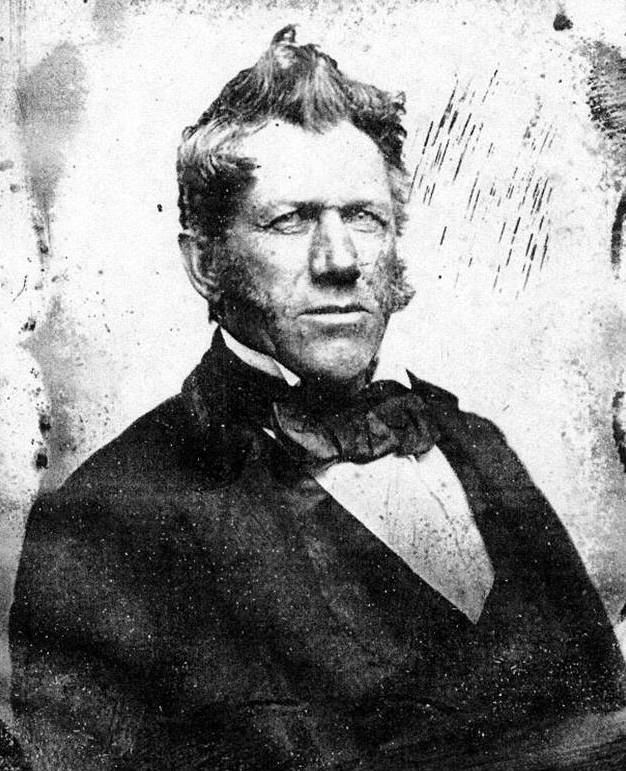
On the twenty-sixth day of November in 1829 Pierce Hawley claimed a portion of Section 30 in Kendall County, Illinois. Since it included a large stand of trees, locals called it Hawley's Grove for a while until Pierce sold his property and it took on the new name of Holderman's Grove. Originally from Vermont, Pierce had a hard time staying put anywhere.
Early Illinois history is peppered with Hawley references. Juliette Kinzie from Chicago tells of staying the night in Hawley's home during a particularly grueling journey. Aaron Hawley, Pierce's brother, was one of the few casualties of the Black Hawk War. Several Hawleys are buried in Naperville, including Pierce's daughter and Joseph Naper's mother.
Stephen Scott was also an early Illinois settler, living on the DuPage River. His son Willard often traveled to Peoria and broke his journey at the Hawley's just as Juliette Kinzie did. While there, he took a shine to Pierce's daughter Caroline and asked to marry her. Father Pierce agreed, but Caroline thought a few hours' courtship was rushing things, so Willard continued on his way.
A couple of weeks later on the return trip, Willard stopped by the Hawley House again and Caroline agreed this time to marry him. They spent their wedding night, as Willard loved to relate, with "the sky for our ceiling -- the stars for our light," under a tree in Plainfield.
Willard and Caroline are both buried in Naperville, the town which they helped grow from its earliest beginnings.
Pierce lived for a time in Naperville as well, becoming a valued member of the Methodist community that Rev. Jesse Walker was developing in his mission to the Potawatomi. But somehow, Pierce heard of Joseph Smith's preaching. As his son later wrote: "Mother at this time felt as though Father had almost committed the unpardonable sin in leaving the Methodist Church and joining the Mormon Church as they was both good Methodist members, but Mother soon got over hurt bad feelings and united with the same church and was one with her husband in faith and doctrine."
Along with other Mormons, the Hawleys (minus Caroline and husband Willard) moved to Missouri, then Iowa and Wisconsin. In the aftermath of religious persecution in Nauvoo and Joseph Smith's subsequent death, many Mormons moved out of Illinois under varying leaders. Brigham Young of course took a group to Utah, but the Hawleys went with Lyman Wight to Texas.
The Texas community flourished for a while. Pierce was chosen to be an elder and his daughter Mary Hawley became one of Wight's plural wives. Eventually Pierce soured on Wight's Mormon Church and along with his wife and married children, he moved to Indian territory in Kansas and then Arkansas, finally coming to rest on August 16, 1858 in Cherokee Nation, Arkansas, where he is buried.
History is the ultimate "reality show!"
Sharing my love for history with both children and adults gives me such a kick and this blog helps folks find fun ways to connect with our past.
For information about my history books please see my web site.
More on the Mormon Story
Local history books from DuPage and Will Counties and even Chicago are great resources to learn more about Pierce and Aaron Hawley, but much of Pierce Hawley's story is also recounted in the book Polygamy on the Pedernales; Lyman Wight's Mormon Villages in Antebellum Texas, 1845 to 1858 by Melvin C. Johnson.
Written around the time that the YFZ (Yearning for Zion) Ranch was in the news, the parallels are obvious. Lyman Wight was a charismatic yet not-mainstream-Mormon leader, much like Warren Jeffs. Wight's religious compound was in Texas, just like Jeffs'. Both men also advocated plural wives and marrying very young girls.
Wight's group collapsed from within due to unrest and disillusionment. About two thirds of Jeffs' group have returned to their Texas compound, although Jeffs himself is serving time in a Utah prison for arranging the marriage of a fourteen-year-old girl. He still faces trial in Texas and the announcement that the Utah Supreme Court will not block extradition hit the newspapers, strangely enough, last week on November 26, which is where this research started!
Written around the time that the YFZ (Yearning for Zion) Ranch was in the news, the parallels are obvious. Lyman Wight was a charismatic yet not-mainstream-Mormon leader, much like Warren Jeffs. Wight's religious compound was in Texas, just like Jeffs'. Both men also advocated plural wives and marrying very young girls.
Wight's group collapsed from within due to unrest and disillusionment. About two thirds of Jeffs' group have returned to their Texas compound, although Jeffs himself is serving time in a Utah prison for arranging the marriage of a fourteen-year-old girl. He still faces trial in Texas and the announcement that the Utah Supreme Court will not block extradition hit the newspapers, strangely enough, last week on November 26, which is where this research started!
Labels:
American History,
Illinois,
Mormon
History is the ultimate "reality show!"
Sharing my love for history with both children and adults gives me such a kick and this blog helps folks find fun ways to connect with our past.
For information about my history books please see my web site.
Where History Is Happening
Christmas at Klein Creek Farm
Saturday, December 4 1:30 pm
Sunday, December 5 3:30 pm
Join "Christmas on the Farm" for an old-fashioned celebration. Visit with Santa and climb into a sleigh to take a picture. Learn the origins of several holiday traditions, and experience Victorian Christmas activities. Stop by a warming fire for caroling and spice cookies. And explore the visitor center to see a re-creation of the farmstead in gingerbread and candy.
Activities are ongoing throughout the event, and registration is not required.
Victorian Valentine's Dinner Party
Sunday, February 13
Looking for something really special to give this holiday? How about tickets to a culinary fantasy, a Victorian Valentine's Dinner Party in an 1880s building in historic Aurora? Join the Aurora Historical Society and Chef Amaury Rosado for a 5-course feast with wine flights in the grand Victorian style, with music and florals of the period, at Chef Amaury's restaurant.
Tickets are $150 per person and include food, wine, tax and gratuity. $50 of each ticket is tax deductible as a gift to the Aurora Historical Society (which thanks you very much!).
Julmarknad Christmas Market at Bishop Hill
Saturday, December 4
Sunday, December 5
10:00 am - 5:00 pm
The holiday season will be opened the traditional
Swedish way during Julmarknad, or Christmas Market in Bishop Hill.
The free events' attractions include Swedish folk characters,
traditional Swedish holiday decorations and quality gifts for the
holidays to be purchased. A special holiday exhibit called "Going to Grandmas" will be on display in the Steeple Building including a holiday Lionel Train display on the first floor. Trains will be running Saturday 10 am to 3 pm and
Sunday; Noon to 3 pm.
Saturday, December 4 1:30 pm
Sunday, December 5 3:30 pm
Join "Christmas on the Farm" for an old-fashioned celebration. Visit with Santa and climb into a sleigh to take a picture. Learn the origins of several holiday traditions, and experience Victorian Christmas activities. Stop by a warming fire for caroling and spice cookies. And explore the visitor center to see a re-creation of the farmstead in gingerbread and candy.
Activities are ongoing throughout the event, and registration is not required.
Victorian Valentine's Dinner Party
Sunday, February 13
Looking for something really special to give this holiday? How about tickets to a culinary fantasy, a Victorian Valentine's Dinner Party in an 1880s building in historic Aurora? Join the Aurora Historical Society and Chef Amaury Rosado for a 5-course feast with wine flights in the grand Victorian style, with music and florals of the period, at Chef Amaury's restaurant.
Tickets are $150 per person and include food, wine, tax and gratuity. $50 of each ticket is tax deductible as a gift to the Aurora Historical Society (which thanks you very much!).
Julmarknad Christmas Market at Bishop Hill
Saturday, December 4
Sunday, December 5
10:00 am - 5:00 pm
The holiday season will be opened the traditional
Swedish way during Julmarknad, or Christmas Market in Bishop Hill.
The free events' attractions include Swedish folk characters,
traditional Swedish holiday decorations and quality gifts for the
holidays to be purchased. A special holiday exhibit called "Going to Grandmas" will be on display in the Steeple Building including a holiday Lionel Train display on the first floor. Trains will be running Saturday 10 am to 3 pm and
Sunday; Noon to 3 pm.
History is the ultimate "reality show!"
Sharing my love for history with both children and adults gives me such a kick and this blog helps folks find fun ways to connect with our past.
For information about my history books please see my web site.
Tuesday, November 16, 2010
October Lighthouse Collapse Lends New Meaning to “Fall”

In 1831, Chicago was still known as Fort Dearborn. Only three ships arrived that year – one of which was the Telegraph, bringing Joseph Naper and company – but the swampy little settlement was poised to be a boomtown.
Innkeeper Mark Beaubien built the first frame house that summer, an elegant improvement over the log cabins and wigwams that were its neighbors, but that was only the beginning. $5000 had been appropriated after a party of United States engineers recommended a lighthouse plan and building commenced in March of the same year.
The contractor for the project was Samuel Jackson or Johnson, depending on who’s memoirs you read. One of the stonemasons working on the construction was Stephen Downer, who was joined the following summer by his dad, Pierce. Pierce Downer later moved out to DuPage County and founded a little settlement that still bears his name – Downers Grove.
The walls of the lighthouse were three feet thick and by autumn the tower reached fifty feet high. Some of the citizens were concerned that the edifice seemed to lean a bit, but on October 30, Jackson took his detractors for a tour to the very top, a group that included “some ladies,” to show off how well-built the tower was.
But just a few hours later, Isaac Harmon wrote his brother, “about nine o`clock in the evening, down tumbled the whole work with a terrible crash and a noise like the rattling of fifty claps of thunder.” Mr. Jackson or Johnson said there must have been quicksand under the foundation, but Isaac and his neighbors were more inclined to believe “that it was all owing to the wretched manner in which it was built.”
Jackson started building again and the lighthouse was completed in 1832. It had a fourteen inch reflector that could be seen for up to seven miles away and had a bell as a fog warning signal. The illustration above shows this second lighthouse as it looked in 1857.
One of the light-house keepers, and in fact, the last keeper, was Mark Beaubien, who tried out many careers in young Chicago. He was in charge of the lighthouse in 1843 and again from 1855 until 1859. During some of those same years, he bought a house in DuPage County and operated a toll house along the Plank Road on the Naperville/Lisle Border, although his son seems to have been the actual toll collector.
Isaac Harmon lamented to his brother “we have had a flattener pass over the face of our prospects in Chicago. The light-house, that the day before yesterday stood in all its glory, the pride of this wondrous village, is now "doused." But Harmon needn’t have worried. This was only a minor setback in a town that has seen its share of rebuilding.
Labels:
Beaubien,
Chicago,
Lighthouse
History is the ultimate "reality show!"
Sharing my love for history with both children and adults gives me such a kick and this blog helps folks find fun ways to connect with our past.
For information about my history books please see my web site.
Chicago's Three Ships of 1831
When the Christmas carol "saw three ships come sailing in" they could have been singing about Chicago in 1831. While shipping was about to explode on the Great Lakes, in 1831 ships were still a rarity.
Chicago wasn't actually a city yet but a small village of log houses and wigwams squatting around Fort Dearborn. The fort, built originally in 1808, was burned to the ground during the War of 1812 by the native people in an attack known as the Fort Dearborn Massacre.
The fort was rebuilt in 1816 and used again by the military, but in the spring of 1831, the Napoleon arrived to remove the last of the troops. That was the first ship. In July, Joseph and John Naper's Telegraph brought settlers and supplies to the Chicago community. In November, Captain Stuart anchored the Marengo off shore in Lake Michigan for the last contact until winter was over.
The sailing season was ruled by ice on the Great Lakes, sometimes not breaking up until May. Captain Stuart was probably racing to get back to Detroit before the lakes froze. Meanwhile, Chicago started building their lighthouse again to be ready for spring's first schooner. The first one collapsed in October when nearly completed.
Photo by Chicago Lighthouse Friends
Labels:
Chicago,
Great Lakes
History is the ultimate "reality show!"
Sharing my love for history with both children and adults gives me such a kick and this blog helps folks find fun ways to connect with our past.
For information about my history books please see my web site.
Where History Is Happening
Holiday Mansion Tours at Naper Settlement
December 4-5, 11-12 and 18-19
11:00 am - 3:00 pm
It's time to spice up the holidays with a tour of the splendidly decorated Victorian-era Martin Mitchell Mansion. Come learn about unique 19th century customs on three weekends in December. Tours include an informative walkthrough tour of the two-story 1893 Mansion and its Carriage House. Please come directly to the Mansion to purchase your tickets. Walk-ins are welcome for this holiday-focused tour with historic ambiance.
$8/person includes $2 off discount coupon for the Museum Store; no advance registration required.
Candlelight Tour and Homespun Holiday Market at Garfield Farm
Saturday
December 4 -5
3:00 - 7 pm
Take time away from that chaotic rush of the holiday season and join us at Garfield Farm Museum for our annual Candlelight Reception. Interpreters wearing period clothing will share with guests what life was like for people during the height of the horse and wagon era. There is no charge for the Candlelight event, but donations will be accepted.
Once Upon a Christmas at Lisle Station Park
Saturday, December 4
3:00 - 8:00 pm
Sunday, December 5
11:00 am - 4:00 pm
Join us at the Museums at Lisle Station Park for old fashioned holiday fun! Enjoy crafts and hayrides, Christmas trees decorated by the Heritage Society, Santa, brick oven baking and more! Don't forget to peruse some antique gift items in the Lisle Heritage Society gift shop.
Holiday House Tour with Norwood Historical Society
Saturday, December 4
3:00 - 8:00 pm
Visitors may check in and begin the tour at the Norwood Park Senior Center and obtain descriptive tour booklets, entrance passes, and route maps, as well as listen to a presentation about community architecture and history and a live musical ensemble. Tour includes five neighborhood homes decorated for the holidays, plus one local place of worship. Includes free admission to Chicago's oldest house, the 1833 Noble-Seymour-Crippen House.
Admission is $20 in advance and $25 at the door, with discounts for groups of 10.
December 4-5, 11-12 and 18-19
11:00 am - 3:00 pm
It's time to spice up the holidays with a tour of the splendidly decorated Victorian-era Martin Mitchell Mansion. Come learn about unique 19th century customs on three weekends in December. Tours include an informative walkthrough tour of the two-story 1893 Mansion and its Carriage House. Please come directly to the Mansion to purchase your tickets. Walk-ins are welcome for this holiday-focused tour with historic ambiance.
$8/person includes $2 off discount coupon for the Museum Store; no advance registration required.
Candlelight Tour and Homespun Holiday Market at Garfield Farm
Saturday
December 4 -5
3:00 - 7 pm
Take time away from that chaotic rush of the holiday season and join us at Garfield Farm Museum for our annual Candlelight Reception. Interpreters wearing period clothing will share with guests what life was like for people during the height of the horse and wagon era. There is no charge for the Candlelight event, but donations will be accepted.
Once Upon a Christmas at Lisle Station Park
Saturday, December 4
3:00 - 8:00 pm
Sunday, December 5
11:00 am - 4:00 pm
Join us at the Museums at Lisle Station Park for old fashioned holiday fun! Enjoy crafts and hayrides, Christmas trees decorated by the Heritage Society, Santa, brick oven baking and more! Don't forget to peruse some antique gift items in the Lisle Heritage Society gift shop.
Holiday House Tour with Norwood Historical Society
Saturday, December 4
3:00 - 8:00 pm
Visitors may check in and begin the tour at the Norwood Park Senior Center and obtain descriptive tour booklets, entrance passes, and route maps, as well as listen to a presentation about community architecture and history and a live musical ensemble. Tour includes five neighborhood homes decorated for the holidays, plus one local place of worship. Includes free admission to Chicago's oldest house, the 1833 Noble-Seymour-Crippen House.
Admission is $20 in advance and $25 at the door, with discounts for groups of 10.
History is the ultimate "reality show!"
Sharing my love for history with both children and adults gives me such a kick and this blog helps folks find fun ways to connect with our past.
For information about my history books please see my web site.
Tuesday, November 2, 2010
Farming the Illinois Prairie

Illinois became a state in 1818, and a steady stream of settlers arrived due to land grants from the War of 1812 and the opening of the Erie Canal in New York.
The earliest settlers in northern Illinois came from the New England states. They were used to rocky soil and heavy forests. The prairies of Illinois were viewed with distrust by many.
Sure, the land wasn't nearly as hilly and studded with rocks, but there weren't many trees on it either. Yankee farmers took that to mean the soil was too poor to support trees and would therefore make lousy farmland.
Little did they know that centuries of grasses had enriched the soil, growing tall and falling back to the earth to decompose with the help of plentiful rain and sun. The land was fertile enough, but the thick thatch of grass roots was difficult to slice through with the plows available to early nineteenth century farmers.
Kate's book Ruth by Lake and Prairie tells of how Joseph Naper, born in Vermont, brought a group of settlers to Illinois in 1831. Just a few years later, another Vermont man arrived in Illinois as well. He was a blacksmith by the name of John Deere and he opened up shop about 80 miles west of Naper's Settlement in Grand Detour.
While farmers were busily clearing land, it was tough work to turn over the prairie soil with traditional cast iron plows. Deere tinkered with the shape of the moldboard to turn over the sod more efficiently and used polished cast steel instead of iron to slice through the soil with greater ease.
Deere sold the first "Plow that Broke the Plains" in 1838 to Lewis Crandall, a local farmer, who was so pleased with how it worked, soon every farmer in northern Illinois wanted one. In the next ten years, Deere sold 1000 plows and 10,000 plows in the ten years after that.
Due to a disagreement with his partner, Deere moved his operations to Moline, but you can still visit the John Deere Historic Site in Grand Detour. The site has regular hours during the summer season, but if you call and arrange a tour, you can still visit Mr. Deere's home during the winter as well.
Labels:
Illinois,
John Deere
History is the ultimate "reality show!"
Sharing my love for history with both children and adults gives me such a kick and this blog helps folks find fun ways to connect with our past.
For information about my history books please see my web site.
The Rutabaga: A Settler's Godsend
![]() |
| Photo by WikiMedia Commons |
The mid 1800's wave of settlers moved into an Illinois that was still quite primitive. Until the Black Hawk War in 1832, native peoples farmed, hunted and lived on the prairies, but there were very few settlements of Europeans. Chicago itself wasn't even founded until 1833 and it only had about 200 inhabitants at the time. Since there were few places to buy food, settlers needed to bring provisions with them or grow it themselves.
Many settlers arrived by schooner through the Great Lakes, and they had to wait until the ice melted before setting sail which could be as late as April or May. If they walked across the country, they still had to wait for the worst of the thaw to be over so that the wagons could get through the mud and swollen streams.
Either way, settlers simply couldn't arrive at their Illinois destinations in time for spring planting. Even if they were able to protect seedling crops during midsummer's blistering heat, there wasn't enough time for most crops to ripen before the first frost.
The rutabaga, however, was one crop they could plant. Considered a "winter vegetable," rutabagas prefer the coolness of autumn and many claim they taste sweeter after a frost. Both the greens and the roots are edible and the roots keep well for a long period of time.
The folks from Naper's Settlement arrived in mid-July. No doubt they brought as many provisions as possible with them but it is also recorded that they planted rutabagas soon after they settled in order to make it through that first winter.
Labels:
Black Hawk War,
Rutabaga
History is the ultimate "reality show!"
Sharing my love for history with both children and adults gives me such a kick and this blog helps folks find fun ways to connect with our past.
For information about my history books please see my web site.
Where History Is Happening
An Evening with Teddy Roosevelt,
Elgin Gala Benefit
Saturday
November 6
6:00 - 9:00 pm
Join us for our first-ever benefit, featuring premier Teddy Roosevelt reprisor Joe Wiegand, our silent auction, and more! Silent auction items include a Hawaiian vacation and other noteworthy prizes. Tickets still available, call now before they're gone!.
$35 for members, $40 for non members
RSVP by calling the Museum at 847.742.4248
History Explorers - Potowatomi and Pioneers
Saturday
November 20
10:00 - 11:30 am
Find out what the pioneers learned from the Native Americans in the early days of the county through stories and hands-on activities for children ages 9 - 11.
$5 per resident child, $7 per non-resident.
Annual Christmas Fest and Bake Sale Warrenville Historical Society
Saturday
November 6
9:00 am - 4:00 pm
Come to Christmas Fest 2010! The Warrenville Museum Guild members are in hustle-bustle mode preparing for the 26th Annual Christmas Fest & Bake Sale.This year's event will be held at the Warren Tavern. Keeping with tradition, the event will feature gift baskets, seasonal decorations, gift items, handmade tree ornaments, and baked goods.
The 2010 raffle will feature Snowmen Gathering, a professionally framed cross-stitch design great for the winter and holidays.Other raffle prizes include a hand-stitched Santa and a Snowman Elf Draft Dodger to block those winter breezes.
Elgin Gala Benefit
Saturday
November 6
6:00 - 9:00 pm
Join us for our first-ever benefit, featuring premier Teddy Roosevelt reprisor Joe Wiegand, our silent auction, and more! Silent auction items include a Hawaiian vacation and other noteworthy prizes. Tickets still available, call now before they're gone!.
$35 for members, $40 for non members
RSVP by calling the Museum at 847.742.4248
History Explorers - Potowatomi and Pioneers
Saturday
November 20
10:00 - 11:30 am
Find out what the pioneers learned from the Native Americans in the early days of the county through stories and hands-on activities for children ages 9 - 11.
$5 per resident child, $7 per non-resident.
Annual Christmas Fest and Bake Sale Warrenville Historical Society
Saturday
November 6
9:00 am - 4:00 pm
Come to Christmas Fest 2010! The Warrenville Museum Guild members are in hustle-bustle mode preparing for the 26th Annual Christmas Fest & Bake Sale.This year's event will be held at the Warren Tavern. Keeping with tradition, the event will feature gift baskets, seasonal decorations, gift items, handmade tree ornaments, and baked goods.
The 2010 raffle will feature Snowmen Gathering, a professionally framed cross-stitch design great for the winter and holidays.Other raffle prizes include a hand-stitched Santa and a Snowman Elf Draft Dodger to block those winter breezes.
History is the ultimate "reality show!"
Sharing my love for history with both children and adults gives me such a kick and this blog helps folks find fun ways to connect with our past.
For information about my history books please see my web site.
Tuesday, October 19, 2010
Photographing the Recently Deceased

In preparation for a teen writing class around Halloween, Kate did a little research on Victorian post-mortem photography.
The 2001 Nicole Kidman movie "The Others" was Kate's first introduction to post-mortem photos. Since then, she's read a few books on the subject, and thought it was a sufficiently macabre subject to hold the interest of blasé teenagers.
One website called it "almost cliché" to find photographs or daguerreotypes of dead relatives when paging through old family albums, but it wasn't a cliché that Kate had ever stumbled upon before.
Until this past month when she popped into her computer a CD that was distributed at a family reunion over the summer. Several funeral photos featuring the recently deceased were among the wedding and baby shots, including the one accompanying this article.
Post-mortem photography became popular and then faded away just before and just after the year 1900, due mainly to the refinement of photography itself. The daguerreotype process was patented in 1839, but capturing a person's likeness remained an expensive and exclusive luxury for decades. Sitting for a photo was a rare splurge.
Still, a photo was a precious reminder of a loved one more personal and evocative than a lock of hair or an amateur sketch. And if your last chance to photograph your loved one occurred just before they were buried, what other choice did you have?
Memento mori photographers tried to make the deceased look as lifelike as possible, as if the subject had just fallen asleep in a chair or on the bed. But some photos clearly show a figure in rigor mortis with their eyes open standing fixed to a frame or leaning at a desk. Another common practice was to paint eyes into the photo over the subject's eyelids to make them look more life-like.
Family groupings where one child in the group has obviously passed on were also common, however creepy it seems to us today. Many photos also exist of parents holding their dead babies for their only portraits, which actually has become common practice once again in hospital settings for still-born or terminally ill infants.
Once photography became cheaper and more wide-spread, people began to take lots of photos on lots of occasions and the need for memorial photography "died away."
Labels:
Funeral Customs
History is the ultimate "reality show!"
Sharing my love for history with both children and adults gives me such a kick and this blog helps folks find fun ways to connect with our past.
For information about my history books please see my web site.
Rest in Peace, Museum of Funeral Customs
![]() |
| Photo by WikiMedia Commons |
The Museum of Funeral Customs used to be right outside the entrance to Oak Ridge Cemetery in Springfield where Abraham Lincoln is buried. Interesting more to history lovers than those seeking sensationalism, it was a nifty little treasure trove of funeral lore.
The Victorians were particularly adept at celebrating death-in-life, perhaps due to Queen Victoria's forty years of mourning for her beloved husband Albert. Funeral clothes, hearses, flowers, embalmers - all were explained in the museum for visitors who have become less and less involved in the mourning process. Not so long ago, families prepared and waked their loved ones at home, often burying them on their own acreage, but today a whole industry takes care of the tasks involved.
Unfortunately, the Museum of Funeral Customs closed in the spring of 2009 due to lack of funds. Perhaps one day, it will be resurrected for a new generation of history buffs.
Labels:
Abraham Lincoln,
Funeral Customs
History is the ultimate "reality show!"
Sharing my love for history with both children and adults gives me such a kick and this blog helps folks find fun ways to connect with our past.
For information about my history books please see my web site.
Where History Is Happening
All Hallows Eve at Naper Settlement
Friday and Saturday, October 22 and 23
6:30 - 10:00 pm
During Naper Settlement's All Hallows Eve, the usually calm and quaint 12-acre museum village is haunted by a diabolical menagerie of spirits, vampires, werewolves, witches and otherworldly creatures of the night. Joining them are some of the most sinister characters and criminals of the 19th century including Lizzie Borden, Count Dracula and others who roam the grounds or take up residence in the historic houses and businesses.
Not recommended for children under 8 or those who might scare easily.
$15/person
Terror on the Railroad at the Illinois Railway Museum
Fridays and Saturdays October 22 - 30
7:00 pm - 11:00 pm
Experience our new demented attractions in our fourth year... Trespass on the abandoned Train of Chills and attempt to reach your destination on the possessed Screamliner. Terror on the Railroad will stop you dead in your tracks...
Tickets $12 each.
Friday and Saturday, October 22 and 23
6:30 - 10:00 pm
During Naper Settlement's All Hallows Eve, the usually calm and quaint 12-acre museum village is haunted by a diabolical menagerie of spirits, vampires, werewolves, witches and otherworldly creatures of the night. Joining them are some of the most sinister characters and criminals of the 19th century including Lizzie Borden, Count Dracula and others who roam the grounds or take up residence in the historic houses and businesses.
Not recommended for children under 8 or those who might scare easily.
$15/person
Terror on the Railroad at the Illinois Railway Museum
Fridays and Saturdays October 22 - 30
7:00 pm - 11:00 pm
Experience our new demented attractions in our fourth year... Trespass on the abandoned Train of Chills and attempt to reach your destination on the possessed Screamliner. Terror on the Railroad will stop you dead in your tracks...
Tickets $12 each.
History is the ultimate "reality show!"
Sharing my love for history with both children and adults gives me such a kick and this blog helps folks find fun ways to connect with our past.
For information about my history books please see my web site.
Tuesday, October 5, 2010
Picture-Perfect History

During research for Ruth by Lake and Prairie, Kate pored over paintings, engravings and sketches from the 1830's to try picking up clues about the era. Photographs from that time simply don't exist. A patent for the daguerreotype process would be granted in France in 1839, but it would be some years before it was widely used. Abraham Lincoln had his first daguerreotype taken in 1846.
Since so much of Ruth's story takes place during a schooner voyage, Kate was particularly interested in descriptions and images of towns along the coasts of the Great Lakes where the Telegraph may have docked. That's why it caught her eye when a report came out recently about restored daguerreotypes of the Cincinnati waterfront.
Taken in 1848 by Charles Fontayne and William Porter, the multiple images create a panorama of almost two miles of shoreline with incredible details including signage on the shops.
Alas, all of the ships at anchor are side-wheel steamers with not a schooner in the bunch, even though sailing ships would continue to be used for many more years. Two history buffs in 1947 used the ship names visible in the image to pinpoint the date on which they were all anchored in Cincinnati at the same time: September 24, 1848. Then they analyzed the shadows of the image to determine at what time the daguerreotype was taken. Their guess was a little before 2:00 pm.
There is a clock face on the image, but at just one millimeter in diameter, the two gentlemen couldn't make out the time, even with a magnifying glass. After this recent restoration, however, and using a microscope scanner, the clock face became visible. The time is 1:55!
Experience this remarkable daguerreotype for yourself. You can view each of the images and zoom in on the one with the clock tower.
Labels:
Daguerreotype
History is the ultimate "reality show!"
Sharing my love for history with both children and adults gives me such a kick and this blog helps folks find fun ways to connect with our past.
For information about my history books please see my web site.
The History of the Daguerreotype
People were experimenting with photosensitivity as early as the 1400's, but it was French artist Louis Daguerre who worked out the kinks in the nineteenth century.
Daguerre and his partner Nicéphore Niépce took the experimentation farther from the silver nitrate and bitumen-based methods already known. Niépce died in 1833, but Daguerre continued to tinker.
An accident involving a mercury thermometer in 1835 led Daguerre to advances in his method and he produced the first image with his process of exposure, development and fixation in 1837.
Daguerre secured a patent for his process in Britain on August 14, 1839. He attempted to secure a patent in France as well, but on August 19, 1839, the French government offered the secrets of the daguerreotype "as a free gift to the world." France did, however, award Daguerre a pension for his discovery.
Public Domain Photo
Labels:
Daguerreotype
History is the ultimate "reality show!"
Sharing my love for history with both children and adults gives me such a kick and this blog helps folks find fun ways to connect with our past.
For information about my history books please see my web site.
Where History Is Happening
Shadows of the Blue and Gray
Saturday, October 9
9:30 am - 9:00 pm
Sunday, October 10
9:00 am - 3:30 pm
Events at City County Park in Princeton, Ill.
include the 33rd Illinois Volunteer Regiment Band, Civil War Fashion Show, President and Mrs. Lincoln, a period dance and night cannon firing,
Battle Demonstrations occur on Saturday and Sunday, with Union and Confederate troops meeting on the field of battle as infantry, cavalry, and artillery.
Admission is $7 for ages 12 and older, $3 ages 4 to 11, and free for children under 4 accompanied by an adult. Wagon tours of camps are $1. Bleacher seating for battle is $2, or bring your own lawn chair.
Scarecrow Harvest Festival at Midway Village Museum
Saturday and Sunday , October 9-10
12:00 am - 5:00 pm
Lots of fun fall activities for the entire family, including demonstrations of rare antique threshing and bailing machinery, square dancing in our 1905 barn, old fashioned games by our 1902 one room school house and horse drawn wagon rides around the Village.
Food and fall treats will be available in Burritt's Town Hall Cafe.
Admission cost: $6 adults; $4 students and children (3 to 17). Members are always free.
Saturday, October 9
9:30 am - 9:00 pm
Sunday, October 10
9:00 am - 3:30 pm
Events at City County Park in Princeton, Ill.
include the 33rd Illinois Volunteer Regiment Band, Civil War Fashion Show, President and Mrs. Lincoln, a period dance and night cannon firing,
Battle Demonstrations occur on Saturday and Sunday, with Union and Confederate troops meeting on the field of battle as infantry, cavalry, and artillery.
Admission is $7 for ages 12 and older, $3 ages 4 to 11, and free for children under 4 accompanied by an adult. Wagon tours of camps are $1. Bleacher seating for battle is $2, or bring your own lawn chair.
Scarecrow Harvest Festival at Midway Village Museum
Saturday and Sunday , October 9-10
12:00 am - 5:00 pm
Lots of fun fall activities for the entire family, including demonstrations of rare antique threshing and bailing machinery, square dancing in our 1905 barn, old fashioned games by our 1902 one room school house and horse drawn wagon rides around the Village.
Food and fall treats will be available in Burritt's Town Hall Cafe.
Admission cost: $6 adults; $4 students and children (3 to 17). Members are always free.
History is the ultimate "reality show!"
Sharing my love for history with both children and adults gives me such a kick and this blog helps folks find fun ways to connect with our past.
For information about my history books please see my web site.
Tuesday, September 21, 2010
Walking the Plank in Naperville

Many towns in Illinois have a "Plank Road," including Naperville. But have you ever wondered what a plank road was?
Dirt roads were the norm in Illinois. They were rutted and dusty when dry and muddy bogs when wet, making travel between towns difficult. Grain, mail and passengers needed to be transported via wagon, stagecoach and horse, so in the mid-1800's plank road corporations were formed.
These corporations financed the road-building and collected tolls from the travelers in order to return their investment and hopefully grow wealthy. Joseph Naper, the founder of Naperville, was one such investor, along with a few other local businessmen including George Martin who built the mansion now available for tours at Naper Settlement.
The Southwestern Plank Road ran from Chicago on to Naperville, generally following an old Indian Trail. Today, Ogden Avenue, named after Chicago's first mayor, roughly traces the same route.
Mark Beaubien, who ran a tavern in Chicago before it was Chicago and also served as a lighthouse keeper, moved out to DuPage County and ran a tollbooth and tavern along the old Plank Road. Toll charges were 25 cents for a two-horse team vehicle and 3 cents for each sheep herded down the road. Some say raised borders along the edges kept wagons on the road so they couldn't avoid the tollbooth.
Unfortunately, railroads were also being built during this same time. The Naperville company refused to let rails through town in an effort to preserve their Plank Road investment, but they just couldn't compete. The company lost money and the Plank Road, which had used up the area's white oak population, either rotted or was "repurposed" by farmers.
Beaubien's tavern was moved and is now open to view as one of the museums at Lisle Station Park. On the north side of Ogden at the Lisle/Naperville border is a monument marking what's left of the Beaubien family cemetery.
Labels:
Beaubien,
Naperville,
Plank Road
History is the ultimate "reality show!"
Sharing my love for history with both children and adults gives me such a kick and this blog helps folks find fun ways to connect with our past.
For information about my history books please see my web site.
Boone County Pioneer Fest This Weekend
For the first time in several years, Kate will not be able to take part in the Boone County Autumn Pioneer Festival. But that doesn't mean you can't!
The festival is free, although donations are welcome to help preserve and recreate local history on the grounds. Soldiers, Native Americans, Farmers, Norwegian immigrants and many other people from Boone County's past will be on hand with gardens, camps, cabins, foods and handicrafts.
Kate has been particularly interested in this festival because the main character from her book Ruth by Lake and Prairie grew up to marry a man who had land in Boone County. Ruth married Harlyn Shattuck and moved out to Boone County to raise her family on Harlyn's acreage.
Ruth died while in her forties, perhaps from complications after her tenth lying-in, but Harlyn soon remarried to take care of his large family, and even increased it by a few. Some of their descendants still live in the area and you can travel down Shattuck Road to the Shattuck Grove Cemetery to see Ruth's grave.
For information on how to get to the Pioneer Festival, see their webpage at the Boone County Conservation District
The festival is free, although donations are welcome to help preserve and recreate local history on the grounds. Soldiers, Native Americans, Farmers, Norwegian immigrants and many other people from Boone County's past will be on hand with gardens, camps, cabins, foods and handicrafts.
Kate has been particularly interested in this festival because the main character from her book Ruth by Lake and Prairie grew up to marry a man who had land in Boone County. Ruth married Harlyn Shattuck and moved out to Boone County to raise her family on Harlyn's acreage.
Ruth died while in her forties, perhaps from complications after her tenth lying-in, but Harlyn soon remarried to take care of his large family, and even increased it by a few. Some of their descendants still live in the area and you can travel down Shattuck Road to the Shattuck Grove Cemetery to see Ruth's grave.
For information on how to get to the Pioneer Festival, see their webpage at the Boone County Conservation District
Labels:
Pioneer Festival
History is the ultimate "reality show!"
Sharing my love for history with both children and adults gives me such a kick and this blog helps folks find fun ways to connect with our past.
For information about my history books please see my web site.
Stacy's Tavern Day in Glen Ellyn
Sunday, September 26
1 pm - 4:30 pm
Live animals, crafts, demonstrations, music, museum tours, bake sale, 1840's school room, rope making, and much more. Included with admission is a celebration of old time music and dance with Common Taters Band. The band will perform inside the History Center building.
Tickets can be purchased at the door on September 26 or in advance for a discounted price at Stacy's Corners Store located at 800 N. Main Street.
Call 630-469-1867 or email: info@gehs.org for more information.
Kline Creek Farm
September 11
1:30 pm - 3:30pm
Blacksmithing Demonstrations
Stop by the wagon shed to see the blacksmith repair equipment and demonstrate the tools and techniques of the trade. All ages. Free. Call (630) 876-5900.
Elgin Cemetery Walk
Sunday, September 26
12:00 pm - 3:30 pm
An autumn tradition in the Fox Valley, the Society's historic Elgin Cemetery Walk is held on the fourth Sunday in September. Visitors to scenic Bluff City Cemetery are guided to gravesites of "former" residents, portrayed by actors in period costumes, who share something of their lives and times. Among them may be a founding pioneer or early doctor, a war hero or crafty politician, a teacher or banker. With a cast that changes each year, these vignettes provide a glimpse of Elgin's rich heritage through the lives of its citizens.
The cemetery is located on Bluff City Boulevard, approximately 1/2 mile east of the intersection with Liberty Street (Rt. 25). Bluff City Boulevard is located one block south of U.S. 20 on Elgin's east side. This beautiful and historic cemetery is the final resting place of many prominent Elginites and has many fine examples of elaborate headstones and mausoleums.
Advance tickets available at the Museum and Ace Hardware
Admission:
$6 Society members and advance purchase
$7 adults day of event
$3.50 under 17.
Sunday, September 26
1 pm - 4:30 pm
Live animals, crafts, demonstrations, music, museum tours, bake sale, 1840's school room, rope making, and much more. Included with admission is a celebration of old time music and dance with Common Taters Band. The band will perform inside the History Center building.
Tickets can be purchased at the door on September 26 or in advance for a discounted price at Stacy's Corners Store located at 800 N. Main Street.
Call 630-469-1867 or email: info@gehs.org for more information.
Kline Creek Farm
September 11
1:30 pm - 3:30pm
Blacksmithing Demonstrations
Stop by the wagon shed to see the blacksmith repair equipment and demonstrate the tools and techniques of the trade. All ages. Free. Call (630) 876-5900.
Elgin Cemetery Walk
Sunday, September 26
12:00 pm - 3:30 pm
An autumn tradition in the Fox Valley, the Society's historic Elgin Cemetery Walk is held on the fourth Sunday in September. Visitors to scenic Bluff City Cemetery are guided to gravesites of "former" residents, portrayed by actors in period costumes, who share something of their lives and times. Among them may be a founding pioneer or early doctor, a war hero or crafty politician, a teacher or banker. With a cast that changes each year, these vignettes provide a glimpse of Elgin's rich heritage through the lives of its citizens.
The cemetery is located on Bluff City Boulevard, approximately 1/2 mile east of the intersection with Liberty Street (Rt. 25). Bluff City Boulevard is located one block south of U.S. 20 on Elgin's east side. This beautiful and historic cemetery is the final resting place of many prominent Elginites and has many fine examples of elaborate headstones and mausoleums.
Advance tickets available at the Museum and Ace Hardware
Admission:
$6 Society members and advance purchase
$7 adults day of event
$3.50 under 17.
History is the ultimate "reality show!"
Sharing my love for history with both children and adults gives me such a kick and this blog helps folks find fun ways to connect with our past.
For information about my history books please see my web site.
Subscribe to:
Posts (Atom)